
How Much Does a Paver Patio Cost in Massachusetts?
A real-world cost breakdown for MetroWest homeowners — including what drives pricing up, why cheap installs fail in New England winters, and what to expect when you get quotes.
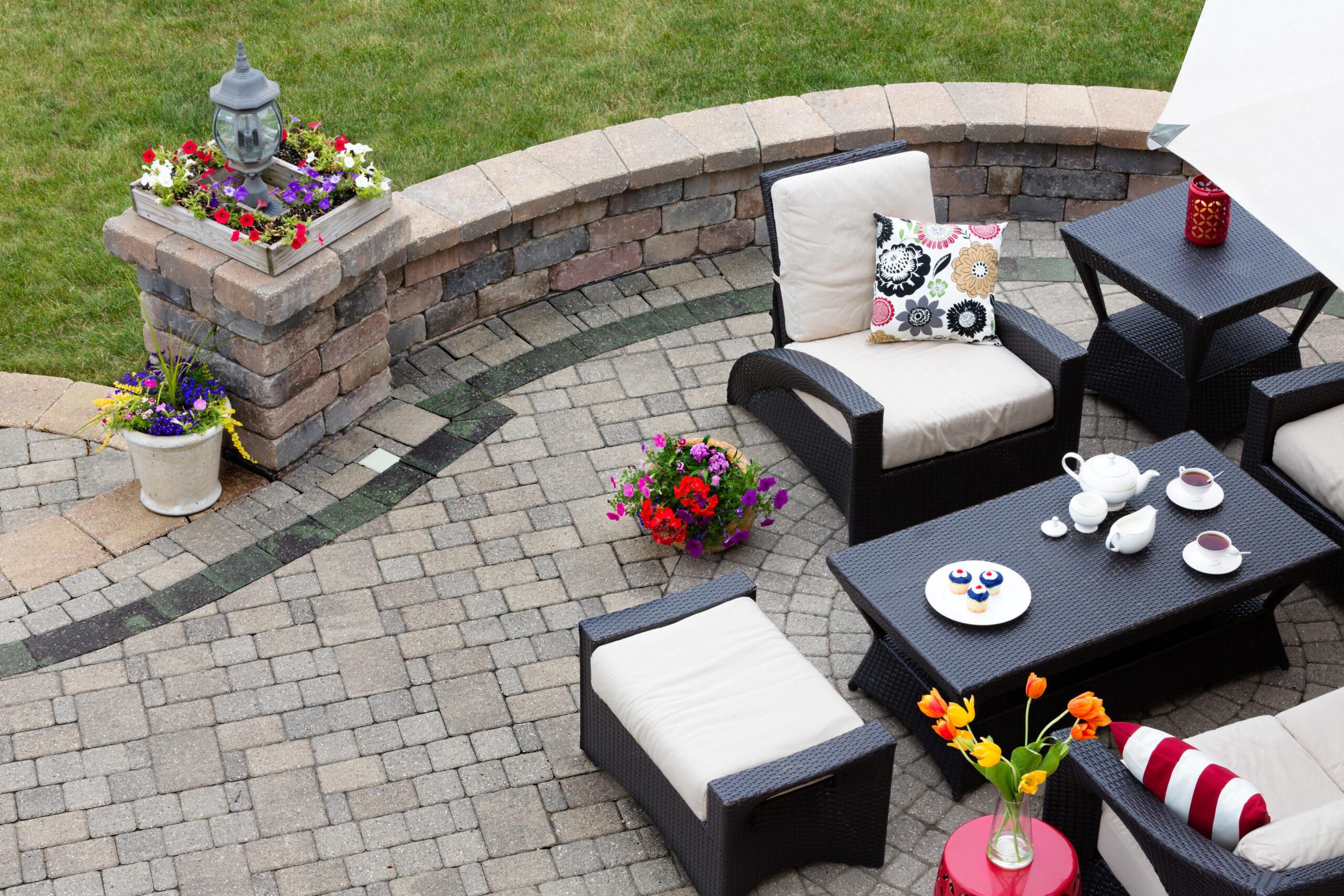
Most Massachusetts homeowners spend between $2,700 and $8,500 on a paver patio installation, with Boston-area averages landing around $5,500. Expect roughly $19–$25 per square foot installed for brick pavers in the Boston/MetroWest market, with total cost driven mostly by patio size, material choice, base preparation, drainage, and grading complexity.
Planning a paver patio for your MetroWest home and trying to figure out what you're actually going to spend? You're not alone. It's one of the most common calls our team gets — and one of the most confusing numbers to pin down online because pricing varies so much by region, site conditions, and contractor.
This guide breaks down what paver patios actually cost in Massachusetts in 2026, using current market benchmarks from Angi, HomeGuide, and other public pricing data. We'll walk through averages, cost-per-square-foot, the factors that move the needle most, and the hidden costs a lot of homeowners get blindsided by — especially the ones specific to New England's freeze-thaw climate.
D & M Landscape and Construction has been building patios and walkways across Framingham, Wellesley, Needham, and the surrounding MetroWest towns since 1989. Everything below reflects what we see in the actual market — not a marketing pitch, not a scare tactic. Just what you need to know before you start getting quotes.
Average Paver Patio Cost in Massachusetts
According to 2026 market data from Angi, building a patio in Boston averages around $5,584, with most homeowners spending between $2,764 and $8,440. That's the all-in total for a typical residential patio installation — materials, labor, and basic site prep combined.
Per-square-foot, you're looking at roughly $19–$25 per square foot installed for brick pavers in the Boston metro area, per Angi's Boston-specific pricing data. HomeGuide's national data puts paver patios at $10–$17 per square foot, but that average pulls down costs from warmer, cheaper markets. Massachusetts runs higher for reasons we'll get into below.
These numbers cover a standard installation with quality materials and proper base prep. High-end natural stone, elevated patios, complex grading, or integrated features like fire pits or outdoor kitchens push the total significantly higher.
Cost by Paver Material
Material choice is one of the two biggest cost drivers (the other is size). Here's what the 2026 market looks like:
| Paver Material | Cost Per Sq. Ft. Installed | Best For |
|---|---|---|
| Concrete Pavers | $15–$25 | Most popular choice; durable, huge range of styles, handles freeze-thaw well |
| Brick Pavers | $18–$30 | Classic New England look; pairs well with colonial and traditional architecture |
| Natural Stone (Bluestone, Flagstone) | $16–$45 | High-end look; one-of-a-kind character; significantly higher investment |
| Permeable Pavers | $8–$30 | Drainage-friendly; good option for sloped yards or properties near wetlands |
Concrete pavers are the most common choice in MetroWest for a reason — they're the best balance of cost, durability, and design flexibility. They come in dozens of colors and patterns, hold up well to freeze-thaw cycles because individual pavers flex with ground movement, and most homeowners end up choosing them.
Brick pavers give you that classic New England aesthetic that works beautifully with older colonials, capes, and traditional homes common throughout Wellesley, Needham, Weston, and Framingham. They cost more than concrete and can chip in extreme cold if water penetrates hairline cracks, so proper installation and drainage really matter.
Natural stone like bluestone or flagstone is the premium option. A bluestone patio runs $16–$25 per square foot in materials and labor according to Angi's 2026 data. It's gorgeous, distinctly New England, and lasts essentially forever — but it's a serious investment.
Concrete pavers handle Massachusetts freeze-thaw cycles better than poured concrete slabs because individual pavers flex with ground movement instead of cracking.
Cost by Patio Size
Size is the other major cost driver. Here's approximately what you'll spend for common patio dimensions in Massachusetts, using mid-range paver pricing of $18–$25 per square foot installed:
| Patio Size | Square Footage | Estimated Installed Cost |
|---|---|---|
| Small (10×10) | 100 sq. ft. | $1,800–$2,500 |
| Medium (12×16) | 192 sq. ft. | $3,500–$4,800 |
| Large (16×20) | 320 sq. ft. | $5,750–$8,000 |
| Extra Large (20×25) | 500 sq. ft. | $9,000–$12,500 |
These are starting ranges for straightforward installations. Add a seating wall, a fire pit, curved edges, elevation changes, or premium materials and the number climbs quickly.
What Actually Drives Paver Patio Costs Up
Beyond size and material, these are the factors that move the final number most:
Base Preparation
This is the part most homeowners don't see and most cheap contractors cut corners on. A proper base includes excavation, a compacted crushed stone aggregate layer, geotextile fabric, and leveled bedding sand. In Massachusetts, where frost depth averages 48 inches, you need a deeper, more carefully compacted base than in warmer climates.
Grading and Drainage
If your yard has any significant slope, drainage issues, or clay-heavy soil (common across MetroWest), the site prep becomes more involved. Angi's Boston data notes that grading lots with significant slope or drainage issues can run $3,300 or more on top of the patio itself. French drains along the patio perimeter, channel drains, and geotextile fabric beneath the base all add to the cost — but skipping them in New England guarantees problems down the road.
Pattern and Design Complexity
Basic patterns like running bond or herringbone are labor-efficient. Intricate patterns, circular designs, custom borders, and color transitions require more cutting, planning, and labor — which adds cost.
Elevation Changes
Raised or elevated patios cost significantly more than ground-level patios. They require retaining structures, additional drainage, and more complex construction. Per Angi's data, elevated patios can run $10–$85 per square foot depending on complexity.
Integrated Features
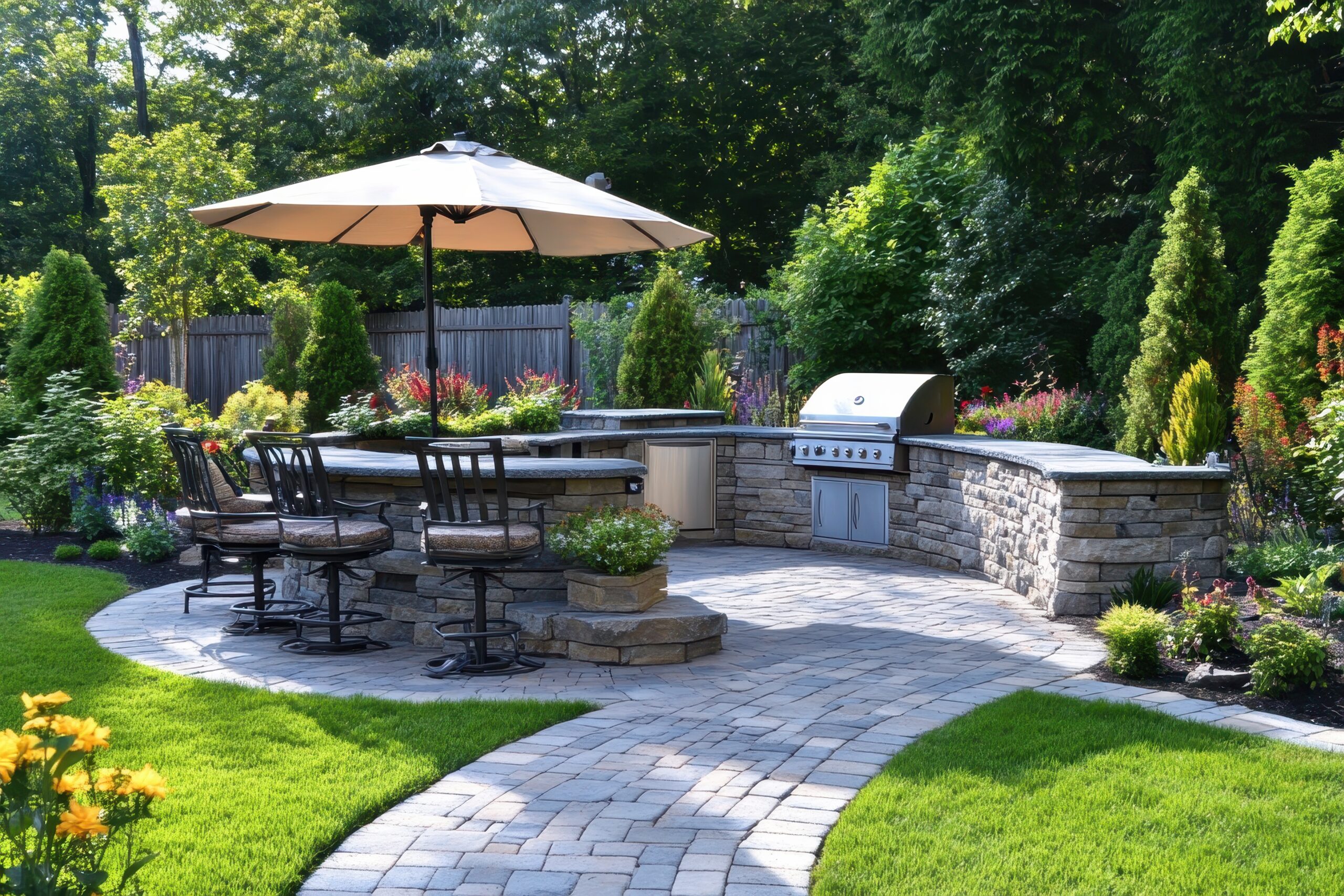
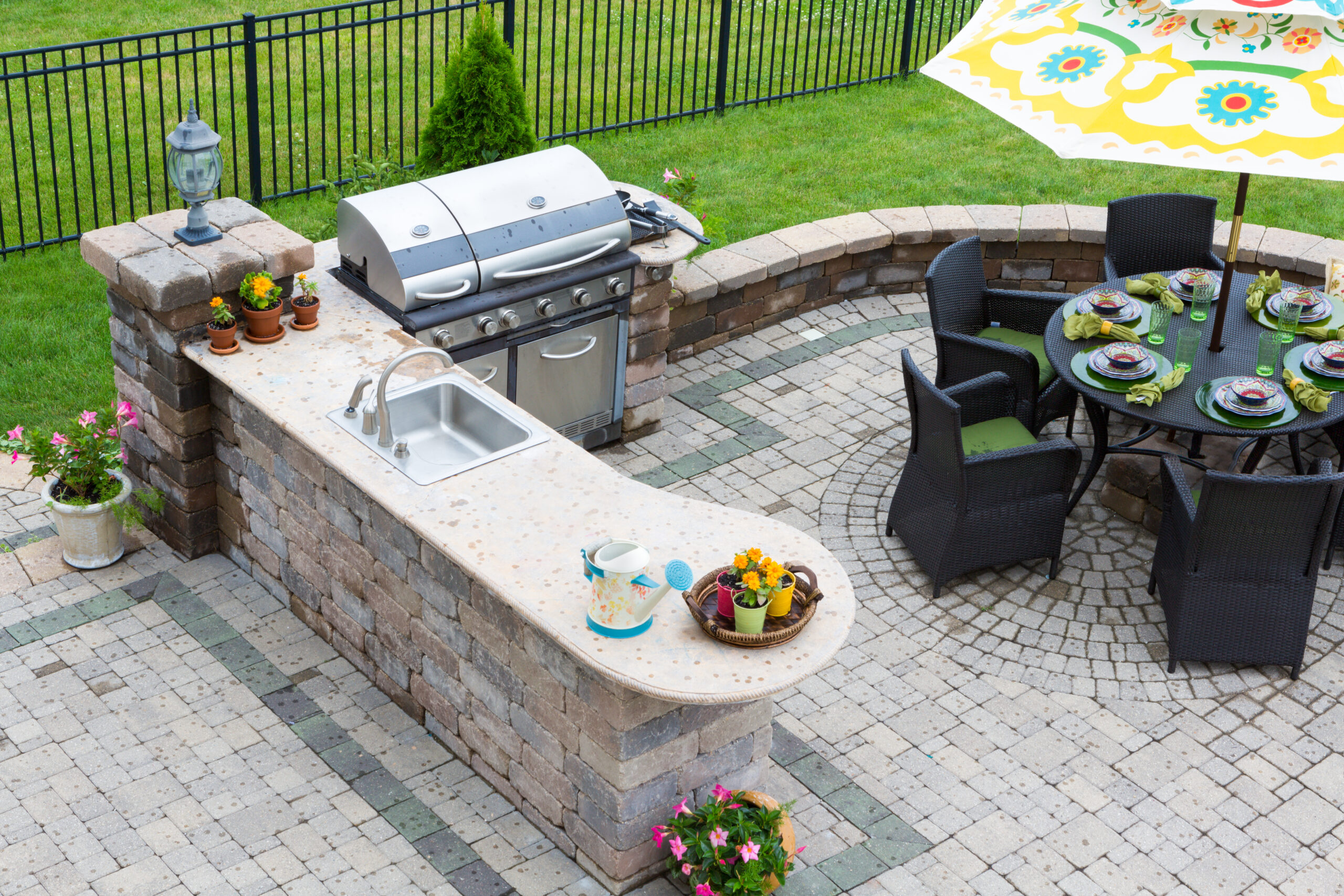
Seating walls, fire pits, outdoor kitchens, pergolas, and landscape lighting all add to a patio project's total. These are often where the biggest value comes from — a patio is nice, a full outdoor living space is transformative — but they also stack onto the bottom line.
Demolition of Existing Surfaces
If you're replacing an old concrete slab or existing patio, demolition adds $5–$10 per square foot. Concrete removal is more expensive than paver removal because it requires jackhammering and heavy equipment.
Want a Real Quote for Your MetroWest Property?
Every property is different. The only way to get an accurate number is an on-site walkthrough. We offer free, no-pressure consultations for Framingham, Wellesley, Needham, and surrounding MetroWest homeowners.
Request a Free ConsultationWhy Massachusetts Paver Patios Cost More Than National Averages
If you've been looking at national cost guides and wondering why your Framingham or Wellesley quotes are coming in higher, this is why:
Freeze-Thaw Requires Deeper Base Prep
Massachusetts frost depth averages 48 inches. To prevent heaving and settling, Boston-area contractors typically install a 4-to-6-inch compacted crushed stone base beneath pavers — compared to the 2-to-4-inch minimum common in milder climates. That deeper base means more excavation, more material, and more labor.
Glacial Till and Clay-Heavy Soil
Much of MetroWest sits on dense glacial till, compacted clay, or fill from older developments. These soils drain poorly, which means grading and drainage work are rarely optional here — they're almost always part of a proper install. In drier, sandier markets, a contractor can skip a lot of drainage prep. In Wayland, Weston, Wellesley, or Framingham, you really can't.
Labor Costs Are Higher in the Northeast
Boston is one of the most expensive labor markets in the country. Experienced hardscape crews here command higher rates than contractors in the South or Midwest. That reflects in the per-square-foot installed price.
Road Salt and Winter Chemicals
Massachusetts winters bring heavy road salt and ice-melt treatment. That inevitably tracks onto patio surfaces. Deicing chemicals accelerate concrete spalling and pitting over time, so Boston-area contractors recommend annual sealing on concrete patios — an ongoing maintenance cost most national guides don't mention.
Hidden Costs New Homeowners Miss
The number on your estimate isn't always the final number. Here's what catches people off-guard:
- Permits — most standard patio installations don't require permits in Massachusetts, but if your project involves retaining walls over 4 feet, significant grading, or electrical work (common with outdoor kitchens or lighting), you may need one. Permit fees typically run $100–$500 depending on your town.
- Demolition — if you have an existing patio or slab to remove, budget an extra $5–$10 per square foot.
- Sealing and maintenance — pavers should be resealed every 3–5 years at roughly $1–$2 per square foot. Concrete surfaces often need annual sealing due to road salt exposure.
- Landscape restoration — construction traffic can damage surrounding lawn and beds. A good contractor includes restoration in the quote; a cheap one doesn't.
- Design fees — if the project includes formal landscape design (not just a patio, but a full plan for planting, grading, lighting, and hardscape together), that can add $1,930–$7,230 according to Angi. Many contractors include design in the project price; some bill separately.
Why Cheap Paver Patios Fail in New England
We'll be direct about this because it matters: the cheapest bid is almost always the most expensive patio long-term. Here's why cheap installs fail in Massachusetts specifically:
Shallow Base Preparation
When a contractor skips the 4-to-6-inch compacted base and goes shallow to save time, the first real winter causes frost heaving. Pavers shift, corners pop up, and within 2–3 years the surface is visibly uneven.
No Drainage Planning
Water trapped beneath a patio freezes, expands, and destroys everything above it. Contractors who don't install proper perimeter drainage or grade the base toward runoff are setting the patio up to fail.
Wrong Edging
Without proper edge restraint, pavers migrate outward over time. Gaps form around the perimeter, joints open up, and weeds and ants move in.
Cheap Joint Sand
Polymeric sand costs more than standard joint sand but locks pavers in place, resists weeds, and handles freeze-thaw. Many low-bid contractors use the cheap stuff to shave a few hundred dollars off the quote.
The cheapest paver patio bid in Massachusetts is almost always the most expensive one — just spread out over 5 years of repairs instead of up front.
How to Get an Accurate Quote
The ranges in this guide are a starting point, not a final quote. To get a real number for your property, you need an on-site walkthrough with a contractor who actually looks at your soil, grading, drainage, and access. Watch out for anyone who gives you a price over the phone without seeing the property — that number will change.
When you're comparing quotes, ask each contractor to spell out:
- Base depth and materials being used (crushed stone aggregate, bedding sand specs)
- Whether geotextile fabric is included beneath the base
- Edging type and installation method
- Joint sand (polymeric or standard)
- Drainage plan for the site
- What's included for grading, demolition, and restoration
- Workmanship warranty terms
- Whether permits are handled by them or by you
If a contractor dodges those questions or won't put the spec in writing, that tells you something. A good contractor will walk through every one of those items with you before you sign anything.
Get a Real Quote for Your Patio
D & M Landscape and Construction has been building patios across MetroWest since 1989. We'll walk your property, talk through what you want, and put together a clear proposal — materials, base spec, drainage plan, timeline, and price — so you can make an informed decision.
508-626-8855Request a Free Consultation
Frequently Asked Questions
Is a paver patio cheaper than a concrete slab?
Up front, a poured concrete slab is typically cheaper — roughly $4–$12 per square foot installed compared to $18–$25 for brick pavers. But concrete slabs in Massachusetts usually crack within 5–10 years due to freeze-thaw, and repairs are often visible and costly. Paver patios cost more initially but last much longer, and individual pavers can be replaced if damaged without redoing the whole surface. Long-term, pavers typically win on value.
Do I need a permit for a paver patio in Massachusetts?
In most MetroWest towns, a standard ground-level paver patio doesn't require a building permit. However, permits may be required if your project involves retaining walls over 4 feet, significant grading changes, electrical work for lighting or outdoor kitchens, or work near wetlands or conservation areas. Wellesley, Framingham, and surrounding towns each have their own specifics. A good contractor will check the permit requirements for your address before starting work.
How long does a paver patio installation take?
A straightforward 200–400 square foot paver patio typically takes one to two weeks of on-site work. Larger projects, integrated features like seating walls or fire pits, or complex drainage work can stretch the timeline to three or four weeks. Weather delays and material lead times can also extend the schedule.
How long does a paver patio last in Massachusetts?
A properly installed paver patio with proper base prep, drainage, and quality materials can last 25+ years in the Massachusetts climate. The key is the base — a 4-to-6-inch compacted crushed stone aggregate base with proper drainage is what separates patios that last decades from ones that need repair in a few years.
Does a paver patio add value to my home?
Yes. A well-installed paver patio typically delivers strong return on investment, with national data showing roughly 50–75% of the cost recouped at resale. In MetroWest, where outdoor living is a significant factor for buyers, a quality patio can be a meaningful selling point — especially when it's paired with other outdoor features like a fire pit, landscape lighting, or a finished landscape design.
What time of year is best to install a paver patio in Massachusetts?
The active install season in Massachusetts runs roughly April through November. Spring and early summer are the busiest periods and book up fast — contractors in MetroWest are often scheduled weeks in advance. If you want work done in spring, start conversations in winter. Late summer and fall are often less busy and can be easier to schedule.
Can I install a paver patio myself to save money?
Technically yes, but it's rarely a good idea in Massachusetts. DIY patios almost always skip the base prep and drainage work that New England freeze-thaw cycles demand. What looks like a good DIY patio in year one often needs major repair or replacement by year three or four. If cost is the main concern, a smaller patio built properly is usually a better investment than a larger one built poorly.
What's included in a paver patio quote?
A complete quote should spell out excavation, base materials and depth, geotextile fabric, bedding sand, pavers (type and pattern), edging, joint sand, drainage work, any grading, cleanup and landscape restoration, and workmanship warranty terms. If a quote is just a lump-sum number without detail, ask for an itemized version so you can compare fairly across contractors.