Do You Need a Permit for a Retaining Wall in Massachusetts?
The short answer: any wall four feet or higher needs a permit — but several other factors can trigger one too. Here's everything Massachusetts homeowners need to know before breaking ground.
In Massachusetts, you generally need a building permit for any retaining wall that is 4 feet or higher, measured from the bottom of the footing to the top of the wall.
This threshold comes from the Massachusetts State Building Code (780 CMR), Section R105.2, which exempts walls under 4 feet from permitting unless they support a surcharge or retain more than 4 feet of unbalanced fill.
However, the 4-foot rule isn't the whole story. Walls near wetlands, in historic districts, supporting driveways or pools, or built in tiers can all trigger permitting even if they're shorter. Many Massachusetts towns also have stricter bylaws than the state code.
Source: Massachusetts State Building Code (780 CMR R105.2). Always verify with your local building department.
The Three Wall Heights Every Homeowner Should Know
Wall height is the first thing a building inspector looks at. Here's exactly how Massachusetts categorizes retaining walls under the State Building Code.
Walls Under 4 Feet
Typically exempt from building permits under the Massachusetts State Building Code (780 CMR), as long as they don't support a surcharge or retain over four feet of unbalanced fill.
Walls 4 Feet or Higher
Require a building permit and often must be designed and stamped by a licensed structural engineer to ensure stability and code compliance.
Tiered Walls
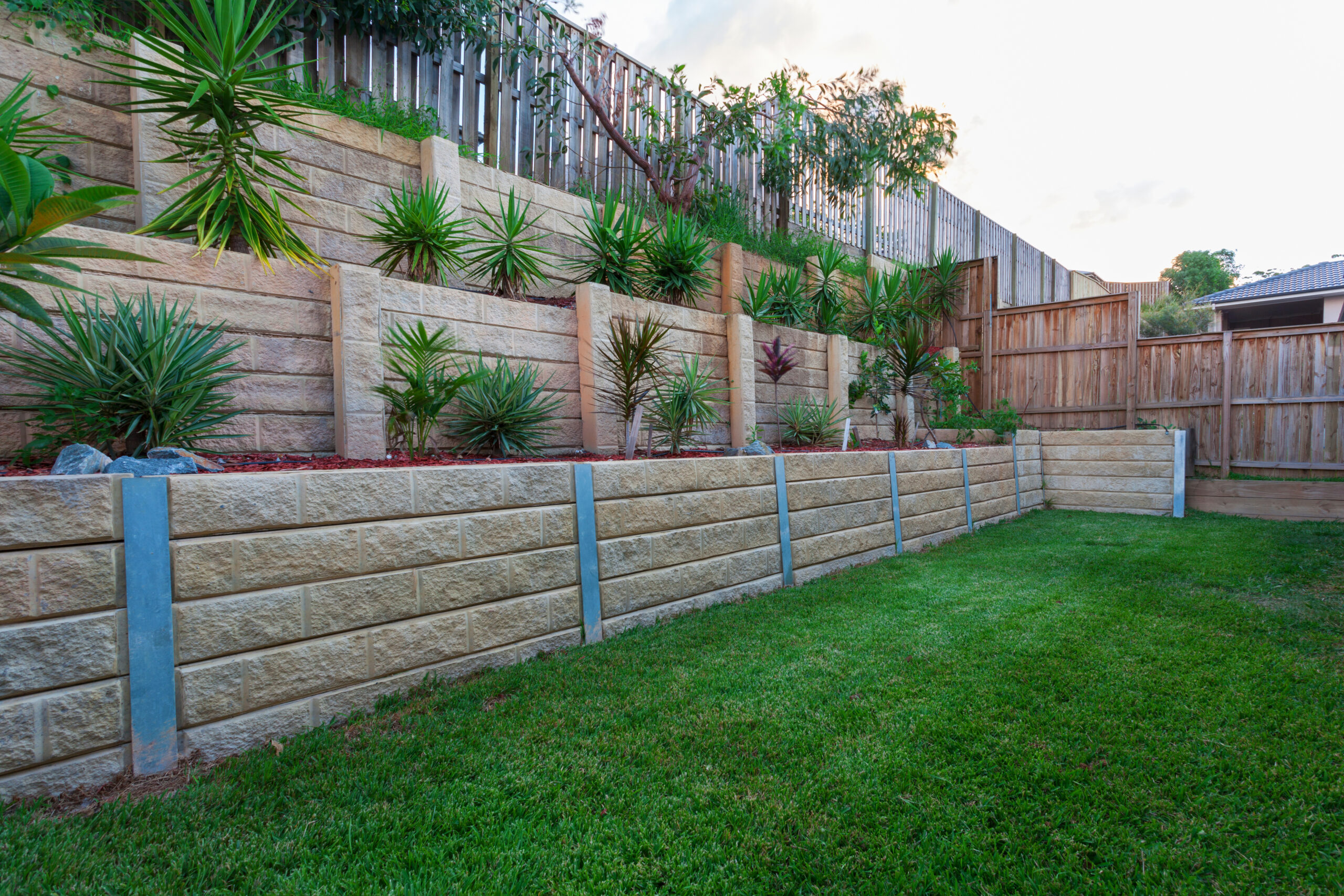
Multiple walls built close together (usually within a distance equal to the height of the taller wall) may have their heights combined — potentially triggering permit requirements even if individual sections are under 4 feet.
The Tiered Wall Loophole That Catches Homeowners Off Guard
Many homeowners assume two 3-foot walls stacked on a slope avoid permitting. They often don't. If the upper wall sits within a distance equal to the height of the taller wall, the building inspector can treat them as a single 6-foot structure — meaning permits, engineering, and inspections are required.
Other Factors That Trigger a Permit Requirement
Even if your wall is under four feet, the following conditions can still require a building permit, special approval, or conservation review in Massachusetts.
- Supports a Surcharge Any wall holding back a driveway, pool, parking area, or sloped yard puts additional load on the structure — usually requiring a permit regardless of height.
- Within 100 Feet of Wetlands Work within wetland buffer zones requires approval from your local Conservation Commission under the Massachusetts Wetlands Protection Act — even for short walls.
- Affects Public Safety Walls within two feet of a sidewalk, walkway, or parking area may require specific safety features like guardrails, fall protection, or setback compliance.
- Located in a Historic District Visible exterior work in designated historic areas may require a separate review by your local historical commission before construction can begin.
- Affects Drainage or Slopes Walls that redirect stormwater, change grade, or sit on slopes may need engineering review to confirm they won't destabilize neighboring properties.
How Massachusetts Towns Vary on Retaining Wall Permits
The state code is the baseline. Many MetroWest and Massachusetts towns layer on their own bylaws — sometimes stricter than the state minimum. Here's a snapshot of how requirements differ across communities we serve.
Town regulations change. Always verify current requirements with the relevant building department before construction. D & M handles permit research and applications as part of every retaining wall project.
How a Retaining Wall Permit Application Actually Works
For projects that require permitting, here's the typical path from concept to inspection. D & M handles all five stages on your behalf.
Site Plan
Detailed drawing showing wall location, dimensions, property lines, and setbacks.
Engineering
Stamped structural drawings from a licensed engineer for walls over 4 feet or load-bearing.
Application
Permit application filed with the local building department, plus any conservation review.
Construction
Build to spec with proper drainage, base prep, and reinforcement per approved plans.
Inspection
Final inspection by the building department to confirm code compliance and close the permit.
Permitted Retaining Wall Projects in Massachusetts
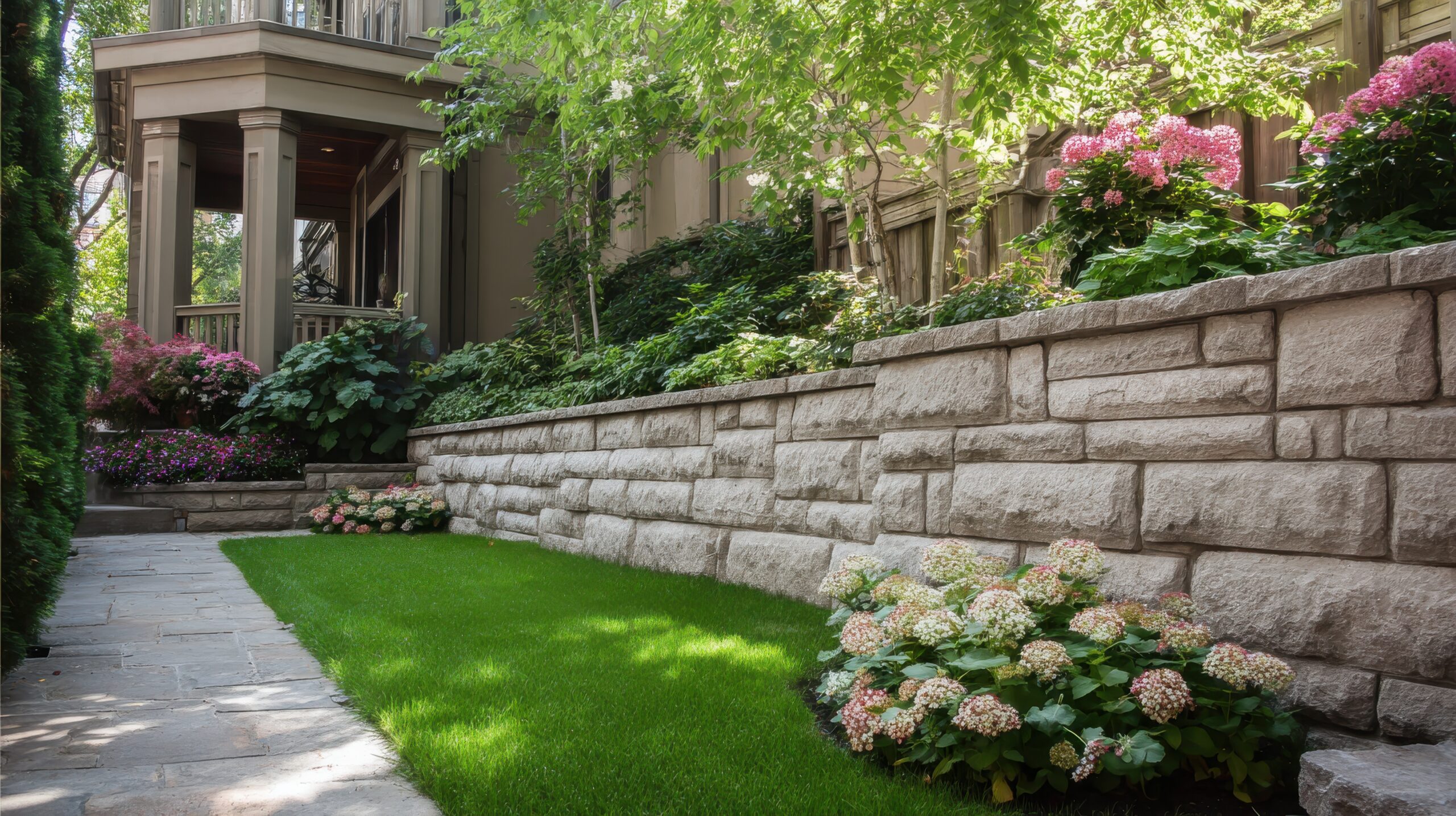
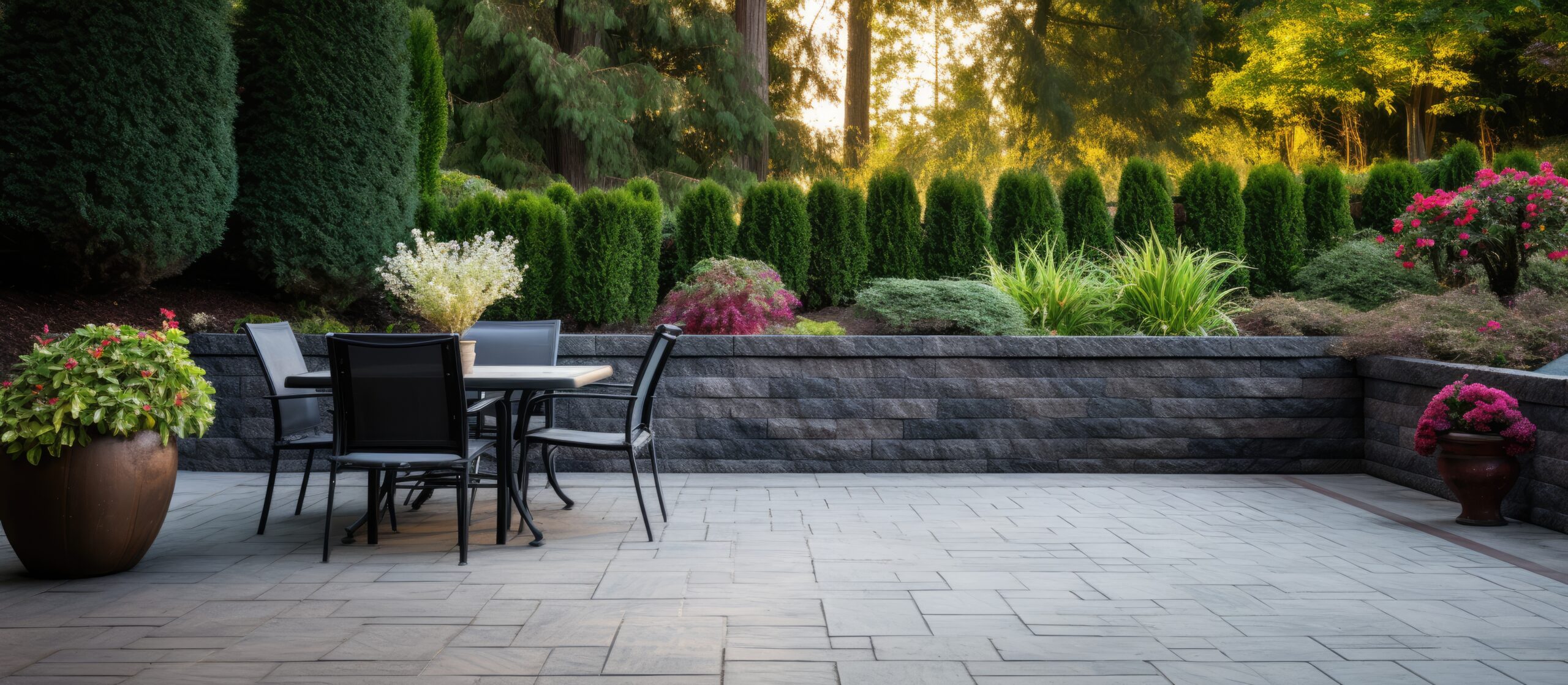
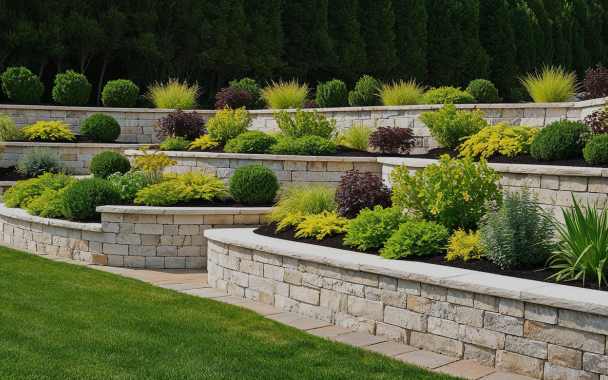
Every retaining wall we build is engineered for the long haul — with proper drainage, base preparation, and structural integrity that meets or exceeds code.

We Handle the Permits So You Don't Have To
Permit processes vary wildly from town to town. We've been navigating Massachusetts building departments and conservation commissions since 1989 — from Framingham to Hingham, Newton to Wellesley. As part of every retaining wall project, we manage the paperwork, the engineering coordination, and the inspections so the wall gets built right and gets closed out properly.
People Also Ask About Massachusetts Retaining Wall Permits
The most common questions Massachusetts homeowners have about retaining wall permitting — answered directly.
Does a 2-foot retaining wall need a footing?
Yes — even a 2-foot retaining wall needs a properly compacted base or footing. While most 2-foot walls in Massachusetts don't require a building permit, they still need a stable foundation to prevent settling, frost heave, and bulging over time. The minimum standard is typically a 6-inch compacted crushed stone base extending below the frost line for the climate. Skipping the footing is the #1 reason short retaining walls fail within a few seasons.
Does a 3-foot retaining wall need drainage?
Yes. Drainage is required for retaining walls of nearly any height in New England, including 3-foot walls. Without proper drainage — typically a perforated pipe behind the wall, gravel backfill, and weep holes — hydrostatic pressure from groundwater and saturated soil will eventually push the wall out of alignment. Massachusetts freeze-thaw cycles make this even more critical. We never build a retaining wall without engineered drainage, regardless of height.
What do you put down before a retaining wall?
The proper base for a retaining wall starts with excavation below the frost line, followed by a compacted layer of crushed stone (typically 6 to 12 inches deep depending on wall height), then a leveling course of finer aggregate. Behind the wall, you install drainage gravel, a perforated drain pipe, and filter fabric to prevent soil from clogging the system. This base is what separates a wall that lasts 20+ years from one that fails in 2.
Is a retaining wall considered landscaping?
Retaining walls are technically classified as hardscape or masonry, which fall under the broader landscaping umbrella. However, from a permit and code perspective, retaining walls over 4 feet are treated as structural elements requiring engineering and building department approval — not just landscape features. That's why hiring a contractor who handles both landscape design and permitted structural work matters.
What is the middle third rule for retaining walls?
The middle third rule is a structural engineering principle stating that the resultant force from the soil load on a retaining wall should fall within the middle third of the wall's base width. If it falls outside that zone, the wall is likely to tip or overturn over time. It's a quick way for engineers to check stability for gravity walls and is one of several calculations used when designing permitted retaining walls in Massachusetts.
What are the 7 common mistakes made when installing retaining wall blocks?
The seven most common retaining wall installation mistakes are: (1) inadequate base preparation, (2) no drainage behind the wall, (3) not setting the first course below grade, (4) skipping geogrid reinforcement on taller walls, (5) failing to step the base on slopes, (6) using improper backfill material, and (7) ignoring local permit requirements. Most of these mistakes don't show up immediately — they appear 2 to 5 years later as bulging, leaning, or collapsing walls.
What happens if I build a retaining wall without a permit in Massachusetts?
Building a retaining wall without a required permit in Massachusetts can result in fines, stop-work orders, mandatory removal or rebuild, and complications when selling your home. Unpermitted structural work also typically isn't covered by homeowner's insurance if it fails or causes damage to neighboring property. The cost of pulling a permit after the fact (with retroactive engineering review) often exceeds what doing it correctly upfront would have cost.
Can you sell a house with unpermitted work in Massachusetts?
Yes, but it's much more difficult. Massachusetts sellers are required to disclose known unpermitted work, and most buyers' attorneys will flag it during the title and due diligence process. Lenders may refuse to finance the property, buyers can demand price reductions, and you may be required to obtain retroactive permits or remove the work as a condition of sale. For retaining walls specifically, this is a common issue that surfaces during home inspections.
How long does a retaining wall permit take to get in Massachusetts?
Standard building permits for retaining walls in Massachusetts typically take 2 to 6 weeks from application to approval, depending on the town and project complexity. Projects requiring Conservation Commission review (for wetland proximity) usually take 8 to 12 weeks. Historic district reviews can add another 4 to 6 weeks. Engineered walls require additional time for stamped drawings before the permit application can even be filed.
Do I need an engineer for my retaining wall?
In Massachusetts, walls 4 feet or higher (or any wall supporting a surcharge) typically require stamped engineering drawings from a licensed structural engineer. The engineer specifies wall design, drainage, reinforcement, base preparation, and any geogrid or anchoring needed. Many towns won't issue a permit without these drawings. D & M coordinates with licensed structural engineers as part of every permitted wall project.
Does D & M handle the permit process?
Yes. As part of every retaining wall project, D & M coordinates the site plan, engineering drawings, permit application, and inspections on your behalf. We've been working with Massachusetts building departments and conservation commissions since 1989 — we know what each town requires and how to move projects through efficiently. You don't need to navigate permits yourself.
Planning a Retaining Wall in Massachusetts?
Whether your project needs a permit, engineering drawings, or just an honest opinion about whether what you're planning will hold up, we're ready to walk your property and talk through it. Family-owned, Massachusetts-based, and in business since 1989.
508-626-8855 Request a ConsultationThis page provides general information about retaining wall permit requirements in Massachusetts based on the State Building Code (780 CMR) and our experience working with local building departments. Specific requirements vary by town and project. This is not legal or engineering advice — always verify current requirements with your local building department, Conservation Commission, and a licensed structural engineer before construction.