Yard Drainage Solutions in Massachusetts
Standing water, soggy lawns, foundation pooling, and erosion — New England drainage problems have New England solutions. French drains, catch basins, dry wells, and regrading from a family-owned crew with 35+ years on Massachusetts properties.
Effective yard drainage solutions in Massachusetts — including French drains, catch basins, and regrading — are essential for managing heavy New England rain, high water tables, and the freeze-thaw cycle that wrecks unaddressed drainage problems.
The right solution depends on the source of the water. Surface water (rain runoff, downspout pooling) is typically addressed with regrading, catch basins, and channel drains. Subsurface water (saturated soil, high water tables) is addressed with French drains, dry wells, and downspout extensions buried away from the foundation.
Massachusetts homeowners deal with three challenges most contractors don't account for: glacial till and clay-heavy soil that doesn't drain, freeze-thaw cycles that crack and heave shallow drainage, and wetland buffer regulations that limit where you can dig. The right contractor designs for all three.
5 Signs Your Yard Has a Drainage Problem
Most drainage issues start small — a wet spot in the lawn, a soggy corner, a puddle that takes too long to dry. By the time water is in your basement, you've waited too long. Here's what to watch for.
Standing Water
Puddles that linger more than 24 hours after rain — especially near downspouts or low spots.
Erosion or Gullies
Bare soil patches, exposed roots, or visible channels in the lawn where runoff is cutting through.
Foundation Pooling
Water collecting along the house, basement seepage, or musty smells in the lower level.
Soggy Lawn Areas
Squishy spots that never dry out, dead grass, or moss growing where turf should be.
Ice Damage in Winter
Heaved walkways, cracked patios, or ice sheets forming where water sits and freezes.
Six Proven Drainage Solutions for Massachusetts Yards
Every yard is different. Most drainage problems are solved with one of these six methods — or, more often, a combination. Here's how each one works and when it's the right call.
French Drains
Gravel-filled trenches with perforated pipes that collect groundwater and redirect it away from foundations and saturated areas.
The workhorse of drainage in New England. Properly installed with filter fabric and drainage gravel, a French drain can last decades.
Catch Basins
Low-profile basins with metal or plastic grates installed at low points in the lawn to catch surface runoff and divert it underground.
Especially useful where multiple downspouts or driveway runoff concentrates in one area.
Regrading
Reshaping the land so the slope moves water away from the foundation rather than toward it — ideally at a minimum fall of one inch per foot for the first 10 feet from the house.
The cheapest and often most effective fix when grading is the root problem.
Dry Wells
Underground structures — often perforated chambers or gravel pits — that collect excess runoff and allow it to percolate slowly into the surrounding soil.
Excellent for handling heavy roof runoff or downspout volume in areas where you can't route water elsewhere.
Downspout Extensions
Buried solid PVC pipes that carry gutter water far from the foundation and discharge it at a safe distance — typically into a dry well, splash block, or daylight outlet.
Often the first thing to address before more complex drainage is needed.
Channel & Strip Drains
Linear drains installed across patios, driveways, walkways, or pool decks to catch sheeting water before it reaches the house or low areas.
Often built directly into hardscape during installation, but can be retrofitted to existing patios.
From Drainage Problem to Drainage Solution
Most drainage problems look worse than they are. Most have straightforward, engineered solutions when the right approach is matched to the actual source of the water.
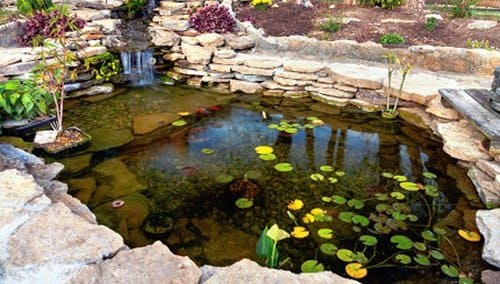
Pooling, Erosion & Saturation
Standing water after every rain. Soggy spots that won't dry out. Soil washing away from grass and beds. Foundation moisture, mold smells, and ice damage in winter. These are the visible symptoms — the underlying cause is usually grading, soil composition, or untreated runoff.
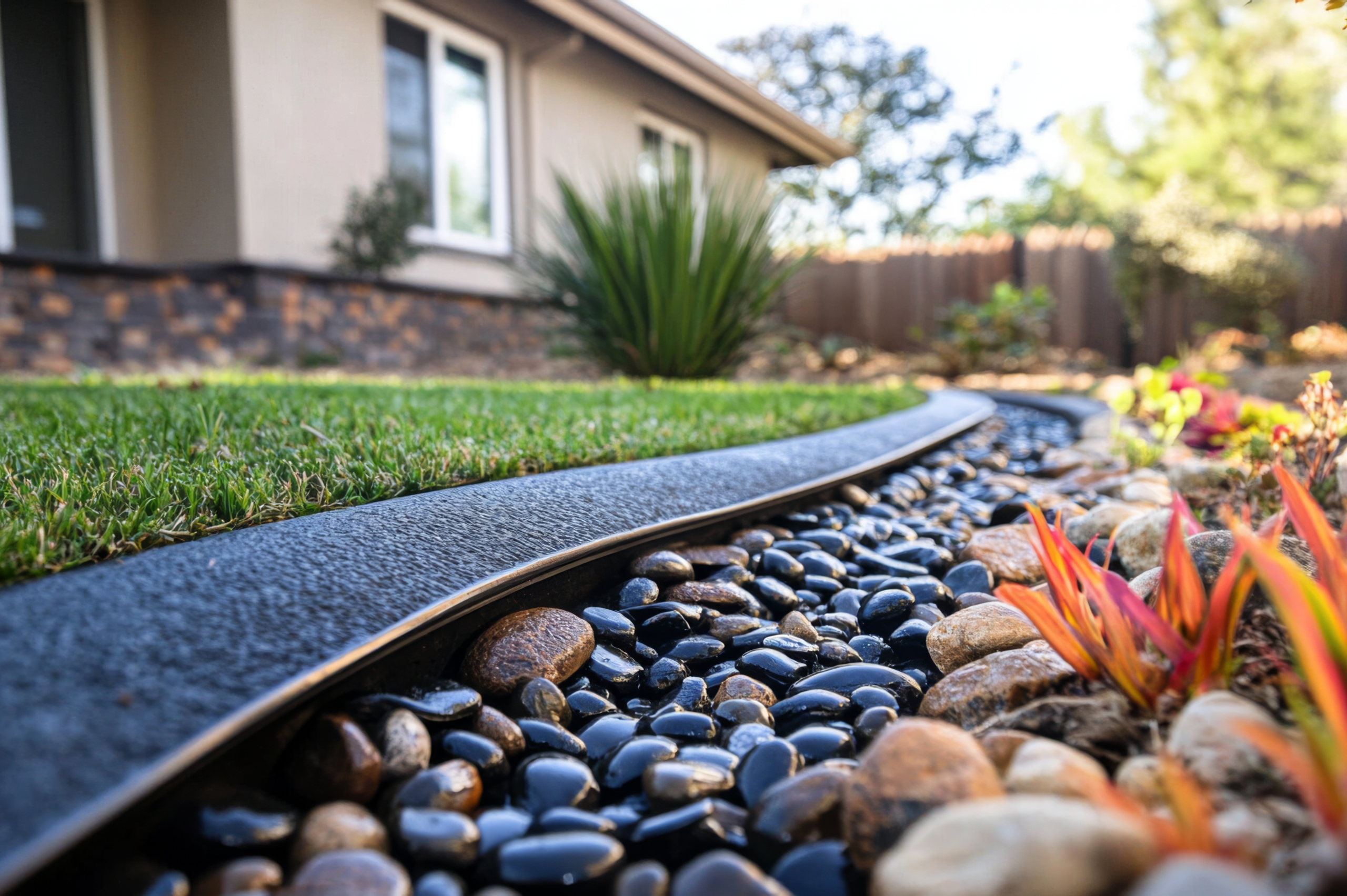
Engineered, Permitted, Built to Last
We assess where the water is actually coming from, design the right combination of regrading, French drains, dry wells, and downspout work, and build it with the base prep and materials needed to survive freeze-thaw. The result: a yard that handles New England rain instead of fighting it.
Why Drainage Is Harder in Massachusetts Than Most States
Generic drainage advice doesn't account for what New England properties actually deal with. These five factors make Massachusetts drainage a specialized job.
Glacial Till & Clay Soil
Much of Massachusetts sits on glacial till — rocky, clay-heavy soil that drains slowly. Water sits on top instead of percolating, which is why pooling is so common. Drainage design has to account for slow infiltration.
Freeze-Thaw Cycles
Frost line in Massachusetts is typically 36 to 48 inches deep. Shallow drainage installations heave, crack, and fail. Pipes have to be buried below frost depth, and outlets need to be ice-resistant.
Spring Snowmelt Volume
Heavy March-April snowmelt overwhelms gutters, downspouts, and any marginal drainage system. Systems designed for summer rain alone aren't sized for the meltwater push that follows a New England winter.
Wetland Buffer Restrictions
The Massachusetts Wetlands Protection Act regulates work within 100 feet of wetlands. Many MetroWest, Charles River, and South Shore properties fall under Conservation Commission jurisdiction — meaning you can't just dig anywhere.
Older Home Foundations
Massachusetts has a huge stock of older homes with field-stone foundations, granite block, and poured concrete from a different era. These foundations need different drainage strategies than newer construction.
Coastal & River Water Tables
South Shore homes (Hingham, Cohasset, Scituate) and Charles River properties often have high water tables — meaning groundwater itself is part of the problem. Standard French drains may not be enough.
When You Can Tackle Drainage Yourself — And When You Shouldn't
Some drainage fixes are weekend projects. Others get expensive fast if done wrong. Here's a straight comparison.
You Can Probably Handle
- Extending downspouts away from the foundation with splash blocks or above-ground pipe
- Cleaning gutters and clearing existing drain outlets
- Minor regrading of small areas using bagged topsoil
- Surface-level dry creek beds for light runoff
- Removing landscape debris blocking water flow
You Should Call a Contractor
- French drain installation requiring excavation below frost line
- Dry wells, catch basins, or systems with underground piping
- Regrading near the foundation or affecting neighboring properties
- Work within 100 feet of wetlands (requires permits)
- Drainage tied into hardscape, patios, or driveways
- Standing water that keeps returning despite DIY attempts
Drainage Done Once, Done Right
The reason drainage fails is almost always installation, not design. Shortcut excavation, undersized pipe, wrong filter fabric, no consideration of frost depth — these are the things that make a drainage system fail in two years instead of twenty. We've been installing drainage for Massachusetts properties since 1989, and we don't cut the corners that haunt homeowners later.
People Also Ask About Yard Drainage
The most common questions Massachusetts homeowners have about drainage — answered directly.
What is best for drainage in a yard?
The best drainage solution depends on the source of the water. For surface water and pooling, regrading combined with catch basins typically works best. For saturated soil and groundwater, French drains are the standard solution. For heavy roof runoff, downspout extensions paired with dry wells. Most Massachusetts yards benefit from a combination of two or more methods rather than a single fix. The right contractor diagnoses where the water is coming from before specifying a solution.
What's the difference between a French drain and a dry well?
A French drain is a horizontal trench with a perforated pipe that collects and redirects water along a length to a discharge point. A dry well is a vertical underground chamber or gravel pit that holds water and lets it slowly percolate into surrounding soil. French drains move water somewhere else; dry wells store and release water in place. They're often used together — the French drain carries water to the dry well for dispersal.
Why does water pool in my Massachusetts yard?
The four most common causes in Massachusetts are: improper grading (the yard slopes toward the house instead of away), clay-heavy glacial till soil that doesn't drain quickly, high water tables (especially in coastal and river-adjacent properties), and concentrated runoff from gutters, driveways, or neighboring yards. A site walkthrough usually reveals which factor is dominant — and often it's a combination of two or more.
How long does a French drain last?
A properly installed French drain in Massachusetts typically lasts 20 to 40 years. The longevity depends on three things: filter fabric quality (prevents soil from clogging the gravel), pipe quality and depth (must be below frost line and properly perforated), and the cleanout access (allowing periodic maintenance). Drains that fail early almost always failed due to installation shortcuts, not the design itself.
Can I install a yard drain myself?
Surface-level drainage solutions — downspout extensions, splash blocks, minor regrading, and shallow dry creek beds — are realistic DIY projects for handy homeowners. Subsurface drainage involving French drains, dry wells, and excavation below frost line is much harder to do correctly. The challenges are sizing the pipe and gravel, achieving consistent slope, sealing connections, and routing the discharge legally. Mistakes typically don't show up until the next heavy rain or first hard freeze.
Do landscapers fix drainage problems?
Most full-service landscape and hardscape contractors handle drainage as part of their core service. Drainage and grading are foundational to nearly every patio, retaining wall, and landscape project — you can't build hardscape without addressing where water will go. D & M has been handling drainage as a primary service since 1989, both as standalone projects and as part of larger landscape work.
Do I need a permit for yard drainage in Massachusetts?
Most basic yard drainage work doesn't require a building permit in Massachusetts. However, projects within 100 feet of wetlands fall under the Massachusetts Wetlands Protection Act and require approval from your local Conservation Commission. Work that affects stormwater discharge to municipal systems may require coordination with the town. Drainage tied into permitted hardscape (like patios over a certain size) may be part of those permit requirements. See our Massachusetts permit guide for related rules.
What soaks up water in a yard without drainage?
Several natural solutions can help absorb yard water when full drainage isn't feasible: rain gardens (shallow planted depressions with water-loving native plants), dry creek beds (decorative stone channels that absorb runoff), bioswales (vegetated shallow ditches), and amending soil with compost to improve infiltration. These work best for surface water and aesthetic management — they're complementary to, not a replacement for, engineered drainage when water volume is significant.
Does forking a lawn help drainage?
Lawn forking — using a garden fork or aerator to puncture the topsoil — helps temporarily with surface compaction and very mild drainage issues. It can improve infiltration in the top few inches of soil. However, it doesn't address the underlying causes of most drainage problems: grading, subsoil composition, or water volume. For persistent issues, forking is a stopgap, not a solution.
What is better for drainage, sand or gravel?
Gravel is significantly better for drainage applications. Crushed stone (typically 3/4-inch clean stone) creates void space that water moves through quickly, doesn't compact under load, and won't clog with fine particles. Sand, by contrast, compacts over time, holds water through capillary action, and migrates into surrounding soil. Sand has its place in specific applications like leveling pavers, but for actual water management — French drain backfill, dry wells, base layers — gravel is the right choice.
Can I dig a hole and fill it with gravel for drainage?
A gravel-filled hole — essentially a primitive dry well — can help with very small, isolated drainage problems. However, without filter fabric, the surrounding soil gradually clogs the gravel voids, and the system fails within a few years. Without proper sizing relative to water volume, it overflows quickly during heavy rain. Without below-frost depth, it heaves in winter. A properly engineered dry well includes all three — which is why it lasts 20+ years instead of one.
What's the best drainage solution for clay soil?
Clay soil — common across much of Massachusetts — drains slowly and holds water. The best approaches are: regrading to move water across the surface rather than relying on infiltration, French drains that bypass the clay layer entirely, and dry wells dug deep enough to reach more permeable soil below. Amending the top layer with compost helps surface infiltration but doesn't solve subsurface saturation. For severe clay sites, a combination of all three is often needed.
Done With Soggy Yards and Wet Basements?
Whether your property needs a full drainage redesign, a single French drain, or just a walkthrough to figure out what's causing the water, we're ready to come out and assess. Family-owned, Massachusetts-based, and in business since 1989.
508-626-8855 Request a Consultation