
Fire Pit Ideas & Materials for Massachusetts Backyards
Gas or wood-burning, stone or brick, built-in or freestanding — how to choose the right fire pit for your New England backyard, and what the installation actually involves.
A custom-built fire pit in Massachusetts typically involves natural stone, concrete block, or brick construction on a compacted gravel base, with either a natural gas line or a wood-burning design — each with different permit requirements, maintenance, and cost profiles.
Gas fire pits offer instant ignition, smoke-free operation, and precise flame control — ideal for close-seating entertaining. Wood-burning pits deliver authentic heat, crackling ambiance, and lower upfront cost, but require chimney-effect ventilation and more maintenance.
In Massachusetts, hard-piped natural gas fire pits require a licensed gas fitter and typically need a permit. Wood-burning fire pits must comply with local open-burning regulations. Both need a non-combustible base and proper setback from structures and property lines.
Two Approaches to Backyard Fire — How They Compare
This is the first decision every homeowner faces. Here's what each option involves, what it costs, and who it's best for.
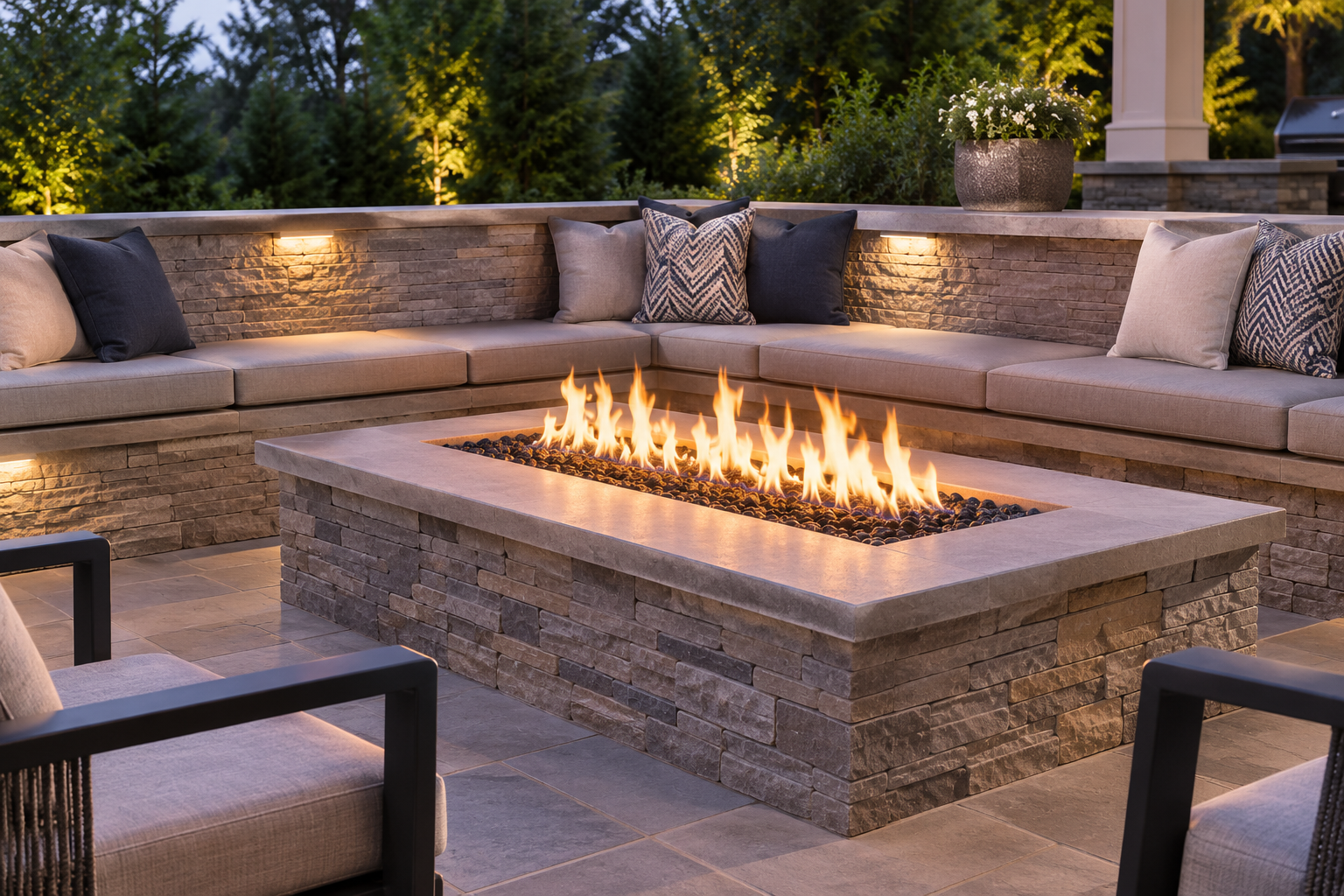
Gas Fire Pit
Instant ignition at the flip of a switch. No smoke, no ash, no sparks. Flame height is adjustable and consistent. Requires a licensed gas fitter to run a natural gas or propane line to the pit location.
The construction involves a stone or concrete block enclosure with a stainless steel burner pan, fire glass or lava rock media, and a weather-resistant ignition system. Most MetroWest towns require a gas permit for hard-piped installations.
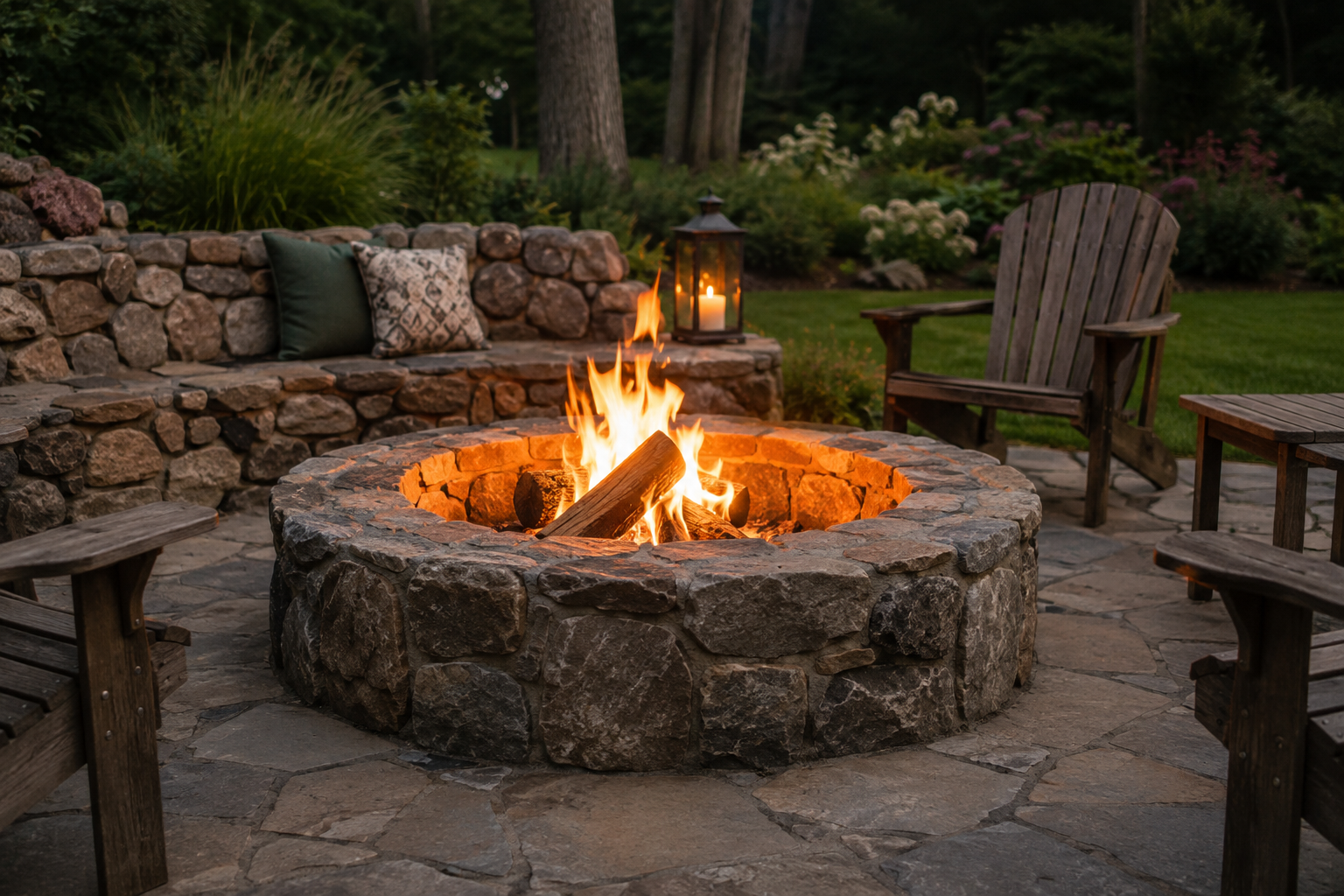
Wood-Burning Fire Pit
Real flames, real crackling, real heat. Wood-burning pits deliver the classic campfire experience and produce significantly more warmth than gas. No gas line needed — just a proper non-combustible base, drainage, and setback from structures.
Construction uses natural fieldstone, granite, or concrete block with a fire-resistant interior. Requires compliance with local open-burning regulations (most Massachusetts towns restrict burning between January 15 and May 1 without a permit).
What Massachusetts Fire Pit Installation Requires
Non-Combustible Base
Every fire pit needs a compacted gravel or paver base that extends at least 2 feet beyond the pit perimeter. Direct ground contact causes settling and creates a fire risk with root systems.
Setback Requirements
Massachusetts fire codes require fire pits to be set back a minimum of 10 feet from structures, property lines, and combustible materials. Some towns require 15 to 25 feet. We verify local codes before design.
Gas Permits
Hard-piped natural gas fire pits require a licensed gas fitter and a gas permit in most MetroWest towns. We coordinate the gas work and permitting as part of the project.
Freeze-Thaw Construction
Fire pit walls and bases must handle Massachusetts freeze-thaw cycles. Proper drainage behind the stone, compacted gravel foundations, and mortar joints designed for thermal expansion prevent cracking and shifting.
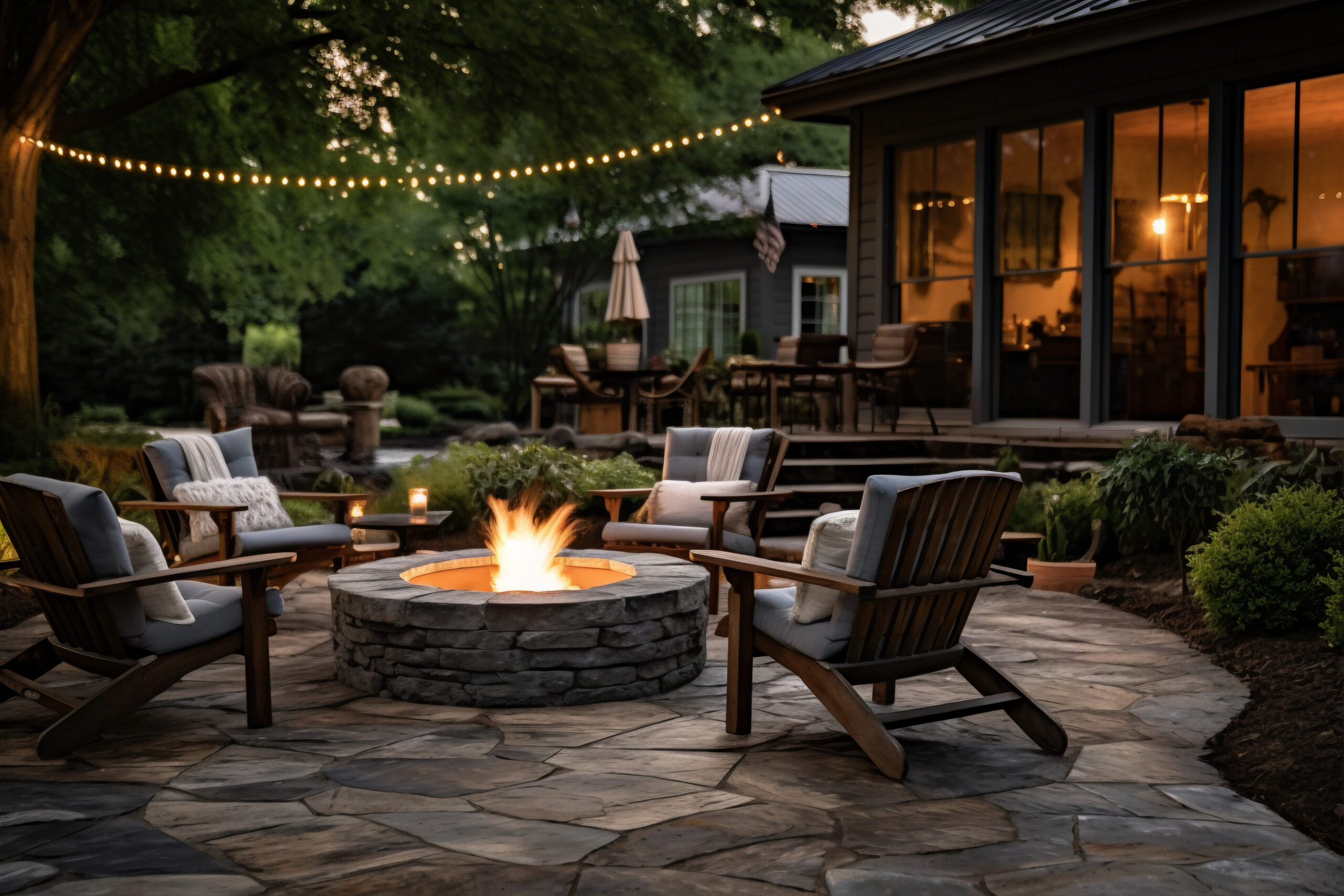
35+ Years of Fire Feature Craftsmanship
We've been building fire pits and fire features across MetroWest since 1989. Every fire pit is integrated into the patio and landscape design — not dropped on top as an afterthought.
People Also Ask About Fire Pits
How much does a custom fire pit cost in Massachusetts?
A professionally built fire pit in Massachusetts ranges from $3,000 to $15,000+, depending on size, materials, and whether it's gas or wood-burning. A basic stone wood-burning pit sits at the lower end, while a large gas fire pit with a seating wall and integrated into a patio commands higher pricing. We provide detailed proposals after the site walkthrough.
Do I need a permit for a fire pit in Massachusetts?
Hard-piped natural gas fire pits require a gas permit and licensed installation in most Massachusetts towns. Portable propane fire pits typically don't need permits. Wood-burning fire pits must comply with local open-burning bylaws — most towns restrict burning between January 15 and May 1. We check local requirements during planning.
Is a gas or wood fire pit better?
It depends on your priorities. Gas is cleaner, more convenient, and smoke-free — ideal for close-seating entertainment areas. Wood produces more heat, costs less upfront, and delivers an authentic campfire experience. Many homeowners choose gas for the main patio pit and keep a secondary portable wood pit for the backyard.
What is the best stone for a fire pit?
For the exterior face, natural fieldstone, granite, and bluestone all work well and complement New England architecture. For the fire-contact interior, fire-rated brick or refractory lining is required — standard stone can crack from direct heat exposure. We always separate the decorative exterior from the structural fire-rated interior.
How far does a fire pit need to be from the house?
Massachusetts fire codes generally require a minimum 10-foot setback from any structure, deck, or combustible material. Some towns require 15 to 25 feet. The setback also applies to overhead clearance — no fire pit under a covered pergola without specific engineering and fire-rated materials. We verify local codes for every project.
Can you build a fire pit on an existing patio?
Yes, in most cases. If the existing patio has a proper compacted base and adequate space for setbacks, a fire pit can be added without removing the patio. Gas lines can be trenched under or alongside the existing hardscape. We assess whether the existing base is sufficient during the site walkthrough.
Does a fire pit increase home value?
Yes. A professionally built fire pit is one of the highest-ROI outdoor features, typically recouping 60 to 80 percent of its cost at resale. In MetroWest markets, buyers actively seek outdoor living features — a fire pit signals that the backyard is designed for use, not just maintenance.
Ready to Design Your Fire Feature?
Whether you want a gas fire pit built into your patio or a fieldstone wood-burning pit anchoring your backyard, we're ready to walk your property and design it. Family-owned and in business since 1989.
508-626-8855 Request a Consultation