Professional Hardscaping & Patio Installation in Wellesley, MA
Bluestone patios, paver walkways, retaining walls, outdoor kitchens, and fire features — designed and built for Wellesley properties by a family-owned crew with 35+ years of Massachusetts craftsmanship.
Hardscaping in Wellesley, MA refers to the non-living, structural elements of your outdoor space — patios, walkways, retaining walls, fire pits, and outdoor kitchens — built from stone, brick, concrete, or natural materials engineered to last through New England winters.
The most popular hardscape materials in Wellesley are natural bluestone (both thermal and cleft finishes), high-density concrete pavers from manufacturers like Unilock and Techo-Bloc, and native New England fieldstone for walls and accents. Material choice affects cost, durability, and maintenance requirements.
Because Wellesley's glacial till soil and severe freeze-thaw cycles destroy poorly installed hardscape within a few years, proper base preparation — typically 6 to 8 inches of compacted crushed stone below frost line — is the single most important factor in whether your patio, walkway, or wall lasts 5 years or 50.
Bluestone vs. Concrete Pavers vs. Natural Stone — What Works Best in Wellesley
Each material has its place. The right choice depends on your aesthetic, budget, and how the space will be used. Here's how they compare for Wellesley properties.
Pennsylvania Bluestone
The signature material for high-end Wellesley patios. Quarried in the Northeast, bluestone offers a timeless aesthetic that complements the traditional architecture found throughout Wellesley's historic neighborhoods.
Available in two finishes: thermal (flamed for a uniform, non-slip surface ideal for pool surrounds) and natural cleft (textured and rustic, suited for traditional estates). Dry-laid installations cost less; wet-laid over concrete slabs are more durable.
Concrete Pavers
High-density interlocking pavers from manufacturers like Unilock and Techo-Bloc are engineered specifically for freeze-thaw climates. The joints allow flexibility — the patio shifts slightly with frost instead of cracking.
Available in dozens of colors, textures, and patterns. Modern pavers can closely mimic natural stone at a lower price point, with manufacturer warranties of 25 years or more on the material itself.
Fieldstone & Granite
Native New England fieldstone and granite are the traditional choice for retaining walls, sitting walls, and rustic patios. These materials have anchored Massachusetts properties for centuries and age beautifully with moss and patina.
Fieldstone walls can be dry-stacked or mortared depending on height and structural requirements. Reclaimed antique granite adds character and pairs exceptionally with formal garden designs common in Wellesley.
Hardscape & Outdoor Living Projects for Wellesley Properties
These are the projects Wellesley homeowners call us for most — the work that transforms a backyard into an outdoor living space that holds its value for decades.
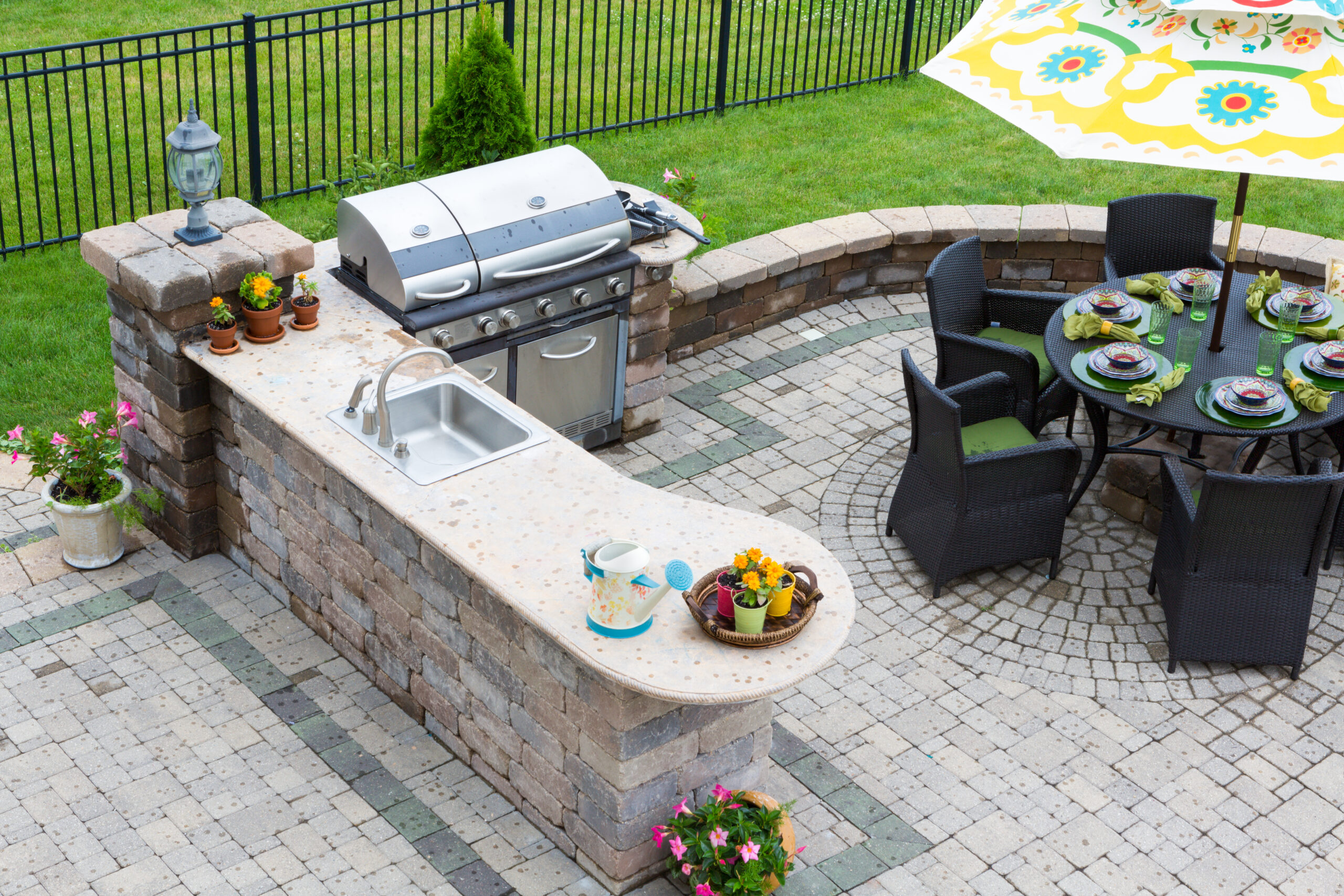
Custom Patios & Outdoor Living Spaces
Bluestone, paver, and natural stone patios designed around how you actually use your backyard — entertaining, dining, lounging, or all three. Every installation starts with deep excavation and a compacted crushed stone base engineered for Wellesley's freeze-thaw cycles. We handle the full scope: grading, drainage, material selection, edge restraints, and polymeric sand jointing.
Patios & Walkways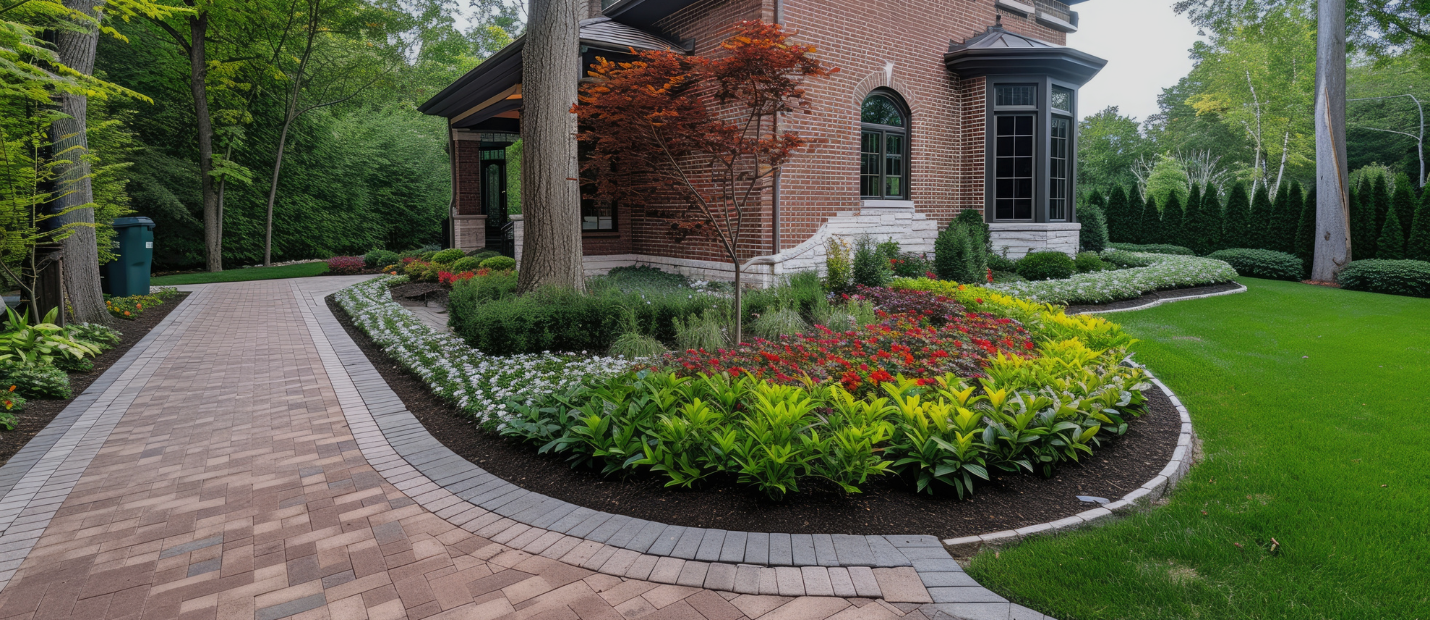
Walkways & Front Entries
Paver and bluestone walkways that connect your driveway, front door, patio, and garden with clean lines and durable construction. Hidden edge restraints and proper base prep keep everything locked in place season after season.
Learn More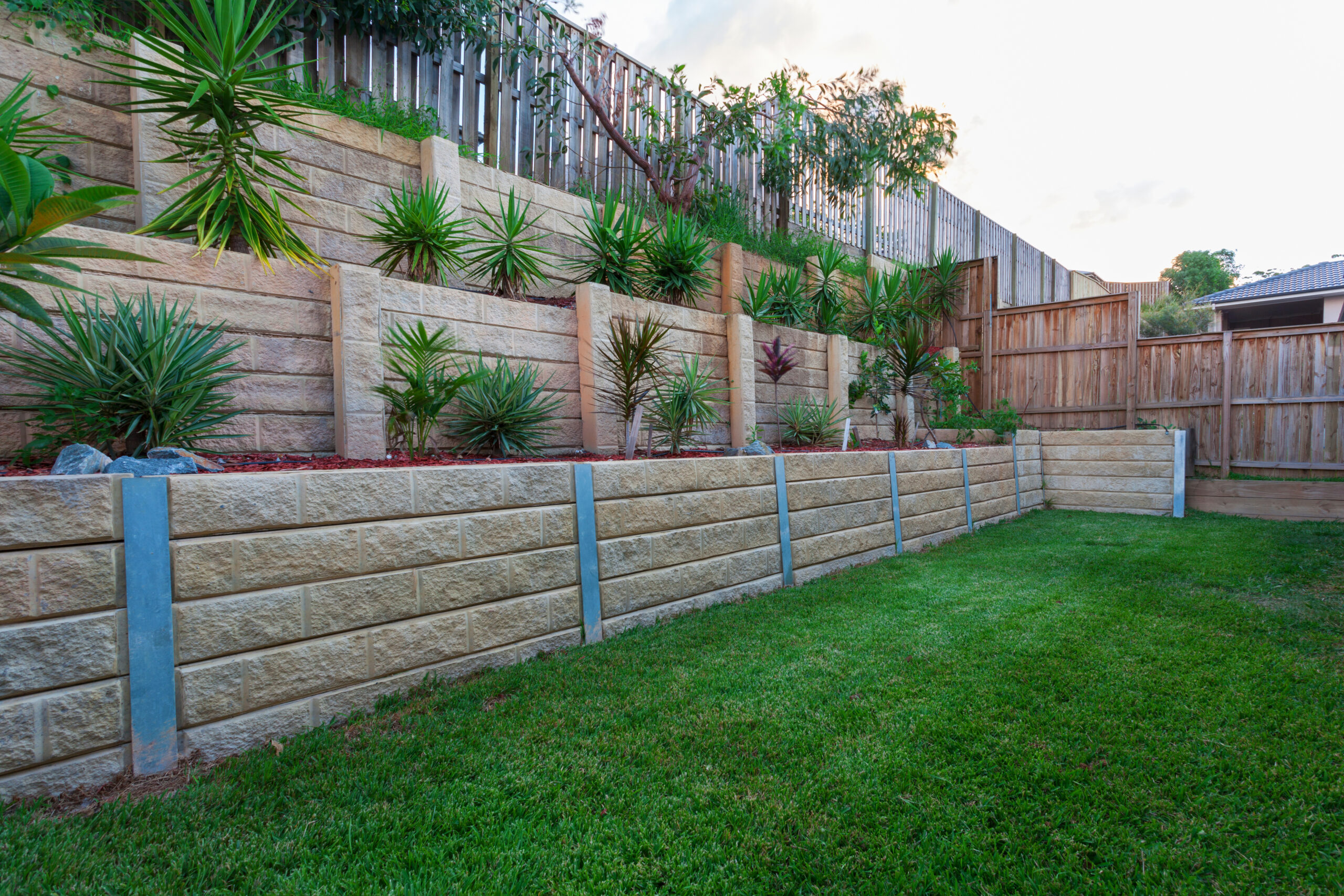
Retaining Walls & Stone Walls
Engineered retaining walls that solve grade changes, prevent erosion, and create usable terraced space. Built with proper perforated drainage, crushed stone backfill, and geogrid reinforcement on taller walls. Walls over 4 feet include permitting and structural engineering.
Learn More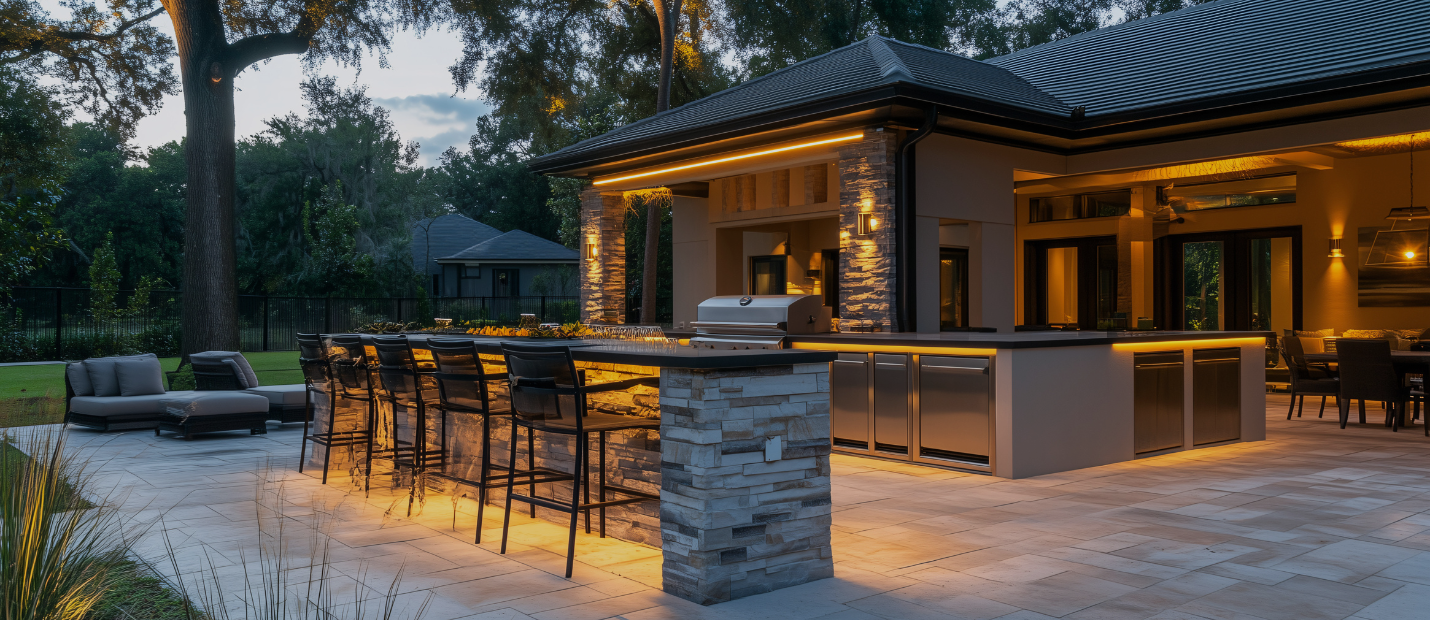
Outdoor Kitchens & Fire Features
Complete outdoor kitchens with grill stations, countertops, storage, and seating walls — plus custom fire pits and fire features that anchor your entertaining space. Gas or wood-burning, stone or brick, integrated directly into your patio design.
Outdoor KitchensThe Installation Process — From Walkthrough to Finished Space
Cutting corners on any of these steps is how hardscape fails in New England. Here's the process we follow on every Wellesley project, every time.
Site Assessment
We walk your property, evaluate grading, soil conditions, drainage, and existing structures. You get a detailed proposal with scope, materials, and timeline.
Excavation & Grading
We excavate 8 to 12 inches of soil and establish proper pitch — typically 1/4 inch per foot — so water moves away from your foundation, not toward it.
Base & Compaction
Six to eight inches of crushed stone compacted in lifts. This is the invisible foundation that prevents frost heave, settling, and shifting — and it's where shortcuts destroy a patio.
Material & Finish
Stone, pavers, or bluestone set on a screeded sand bed with edge restraints spiked into the ground. Joints filled with polymeric sand to lock everything tight and block weeds.
Final Walk & Cleanup
We walk the finished project with you, verify drainage, check every detail, and leave your property cleaner than we found it. Our guarantee backs the work.
Why Hardscaping in Wellesley Demands Local Expertise
Wellesley isn't a generic suburb. The soil, the weather, the municipal standards, and the expectations are all specific — and your hardscape contractor needs to build for all of them.
Glacial Till & Clay Soil
Wellesley sits on glacial till — rocky, clay-heavy soil that drains poorly and shifts with moisture. Patio and wall bases have to be engineered for slow infiltration and frost depth. A base designed for sandy soil will fail here within two winters.
36–48 Inch Frost Line
Massachusetts frost line runs 36 to 48 inches deep. Shallow installations heave, crack, and separate. We excavate and build to depth — which is why our patios and walls survive decades instead of seasons.
Permits & Conservation Buffers
Wellesley requires stamped structural drawings for retaining walls 4 feet and higher, and Conservation Commission review for projects near wetlands. We handle the permitting, the engineering coordination, and the inspections as part of every qualifying project.
Wellesley's Architectural Standards
Classic colonials, Tudors, and renovated estates define the Wellesley streetscape. The hardscape has to match. We design with materials and profiles that complement the neighborhood character — not fight against it.
Hardscaping Done Once, Done Right
The reason hardscape fails in New England is almost always the base — not the stone on top. Shortcut excavation, insufficient compaction, wrong drainage, no edge restraints. These are the invisible decisions that determine whether your patio lasts 5 years or 50. We've been building hardscape across MetroWest since 1989, and we don't cut the corners that come back to haunt homeowners.
People Also Ask About Hardscaping in Wellesley
The most common questions Wellesley homeowners have about patios, walkways, retaining walls, and hardscape materials — answered directly.
Do I need a permit to build a patio in Wellesley, MA?
A flat, ground-level patio typically does not require a building permit in Wellesley. However, if the patio is raised, involves significant earth-moving, or includes a structural retaining wall over 4 feet, a permit from the Wellesley Building Department is required. Projects within wetland buffer zones also need Conservation Commission approval. We review permit requirements during the planning phase so nothing delays your project.
How much does a 20x20 patio cost in Massachusetts?
A 20x20 foot patio (400 square feet) typically costs between $8,000 and $14,000 fully installed in Massachusetts, depending on the material. Standard concrete pavers sit at the lower end, while natural bluestone and complex patterns with custom cuts push the price higher. That range includes excavation, base preparation, materials, and labor. We provide a detailed, itemized proposal after the on-site walkthrough so you know exactly what your project will cost before any work begins.
Is bluestone more expensive than pavers?
Yes. Natural bluestone generally costs more than standard concrete pavers — both in material cost and installation labor, since bluestone requires more precise cutting and fitting. However, a properly installed bluestone patio can last 50 to 100 years with minimal maintenance, making the long-term cost per year comparable. The choice ultimately comes down to aesthetic preference and budget. We install both and can walk you through samples during the consultation.
How long does a dry-laid bluestone patio last?
A properly installed dry-laid bluestone patio can last 50 to 100 years. The stone itself is extremely durable — it was quarried in the harsh Northeast environment and handles freeze-thaw well. The longevity depends entirely on the base: a deep, compacted crushed stone foundation with proper drainage and polymeric sand joints. The gravel base may need re-leveling or re-sanding every 10 to 15 years, but the stone endures.
What is the difference between landscaping and hardscaping?
Landscaping is the broad category covering everything in your outdoor space — both living elements (plants, trees, grass, mulch) and built elements. Hardscaping specifically refers to the non-living, structural components: patios, walkways, retaining walls, fire pits, outdoor kitchens, and driveways built from stone, brick, concrete, or wood. Most Wellesley projects combine both. D & M handles landscaping and hardscaping under one roof, so the design works as a single integrated space.
How much should I budget for hardscaping?
Most industry guidance suggests budgeting 5 to 10 percent of your home's value for comprehensive hardscaping. In practice, Wellesley projects typically range from mid-five figures for a patio with a fire pit to well into six figures for full backyard renovations with retaining walls, outdoor kitchens, and integrated landscape design. A simple walkway starts much lower. The best approach is a site walkthrough and detailed proposal — we provide both at no cost.
How tall can a retaining wall be without a permit in Massachusetts?
Under the Massachusetts State Building Code (780 CMR), retaining walls under 4 feet — measured from the bottom of the footing to the top of the wall — are generally exempt from building permits, as long as they don't support a surcharge or hold more than 4 feet of unbalanced fill. Walls 4 feet or higher require a permit, and Wellesley typically requires stamped structural drawings from a licensed engineer. See our full Massachusetts retaining wall permit guide for details.
How much does a retaining wall cost in Massachusetts?
Retaining walls in Massachusetts cost between $40 and $150 per square face foot, depending on the material and engineering complexity. Interlocking concrete block walls sit at the lower end, while natural stone, poured concrete, and walls requiring structural engineering and permitting command higher pricing. Drainage, base prep, and the extent of excavation also factor in significantly. We provide itemized pricing during the proposal stage.
Does bluestone get too hot in the sun?
Bluestone can get warm under direct summer sun due to its darker color, which absorbs heat. For patios used primarily around pools, some homeowners opt for thermal bluestone (which has a slightly cooler surface than natural cleft) or lighter-colored pavers. That said, bluestone doesn't get as hot as dark-colored composite decking, and most Wellesley homeowners find it comfortable for general patio use. We can discuss material options based on how and where your patio will be used.
How long does it take to install a paver patio?
Most residential paver patios take 3 to 7 days to complete, depending on size, complexity, and site conditions. That timeline covers excavation, base preparation, setting the pavers, installing edge restraints, and applying polymeric sand. Larger projects with retaining walls, steps, or fire features take longer. We provide a clear timeline in every proposal so you know what to expect before we break ground.
Are pavers better than poured concrete for a patio?
For New England climates, pavers are generally the better choice. The joints between individual pavers allow the surface to flex with frost cycles instead of cracking — which is the primary failure mode of poured concrete in Massachusetts. If a single paver is damaged, it can be replaced individually without disturbing the rest of the surface. Poured concrete also tends to develop surface cracking and requires more frequent sealing. The one advantage of poured concrete is lower upfront cost on very large, flat areas.
Do paver walkways add value to a home?
Yes. A high-quality paver or bluestone walkway improves curb appeal and can yield an ROI of 50 to 70 percent when selling your home. In Wellesley specifically, where buyers expect polished outdoor spaces, a well-designed front walkway and patio are table-stakes features that directly impact how a property is perceived during showings. The value goes beyond resale — a properly installed walkway also eliminates tripping hazards and protects the landscaping along the path.
Ready to Build Your Wellesley Hardscape?
Whether you're planning a bluestone patio, a retaining wall, an outdoor kitchen, or a complete outdoor living renovation, we're ready to walk your property and talk through it. Family-owned, Massachusetts-based, and in business since 1989.
508-626-8855 Request a Consultation