
Paver Walkway Cost & Design Guide for Massachusetts
Bluestone, concrete pavers, or natural stone — what each walkway material costs, how long it lasts, and what the installation process looks like in New England.
A professionally installed paver walkway in Massachusetts typically costs $20 to $45 per square foot, depending on the material, pattern complexity, and site conditions. Bluestone walkways fall at the higher end; concrete pavers are more affordable.
For a standard 4-foot-wide, 40-foot-long front walkway (160 square feet), expect a total project cost between $3,200 and $7,200 fully installed. That includes excavation, compacted crushed stone base, setting bed, edge restraints, and polymeric sand jointing.
The biggest factor in whether your walkway lasts 5 years or 50 isn't the material on top — it's the base underneath. In Massachusetts, proper base depth and frost-line preparation are non-negotiable.
Three Walkway Materials for Massachusetts Properties
Each material has a different aesthetic, lifespan, and maintenance profile. Here's how they compare for New England conditions.
Bluestone
The signature walkway material for New England. Quarried in the Northeast, bluestone handles freeze-thaw naturally and ages with a graceful patina that complements colonial and traditional architecture.
Available in thermal (uniform, non-slip) and natural cleft (rustic, textured) finishes. Can be dry-laid on stone dust or wet-laid over a concrete slab for maximum permanence.
Concrete Pavers
Interlocking concrete pavers from manufacturers like Unilock and Techo-Bloc are engineered for freeze-thaw climates. The joints flex with frost instead of cracking, and individual pavers can be replaced if damaged.
Available in dozens of colors, textures, and patterns — from traditional herringbone to modern linear. Manufacturer warranties often exceed 25 years on the material.
Fieldstone & Flagstone
Irregular natural stone set with wider joints and moss-friendly gaps. Fieldstone and flagstone create a rustic, organic aesthetic that blends naturally with woodland gardens and traditional New England landscapes.
Requires careful hand-fitting and slightly more maintenance (re-leveling every few years), but the character is unmatched by manufactured alternatives.
The Difference Between a Walkway That Lasts and One That Doesn't
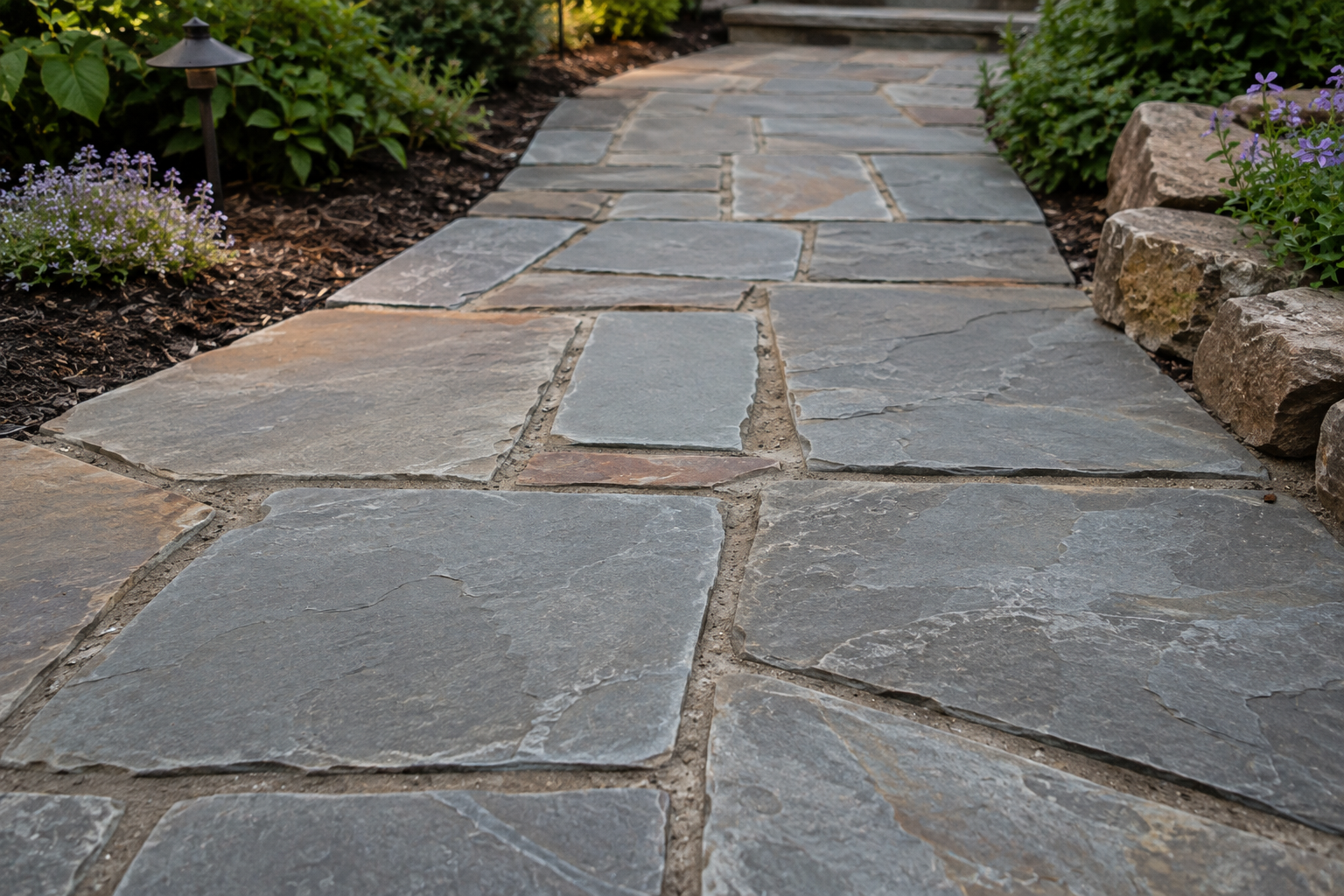
Base Preparation Is Everything
In Massachusetts, the frost line runs 36 to 48 inches deep. A walkway built on a shallow base will heave, crack, and shift within two winters. Every walkway we install starts with 6 to 8 inches of compacted crushed stone, proper grading for drainage, and a screeded setting bed — regardless of the surface material.
The other invisible factor is edge restraint. Without spiked edge restraints holding the perimeter, pavers gradually migrate outward over time. It's the kind of detail you don't notice until the walkway starts spreading apart in year three.
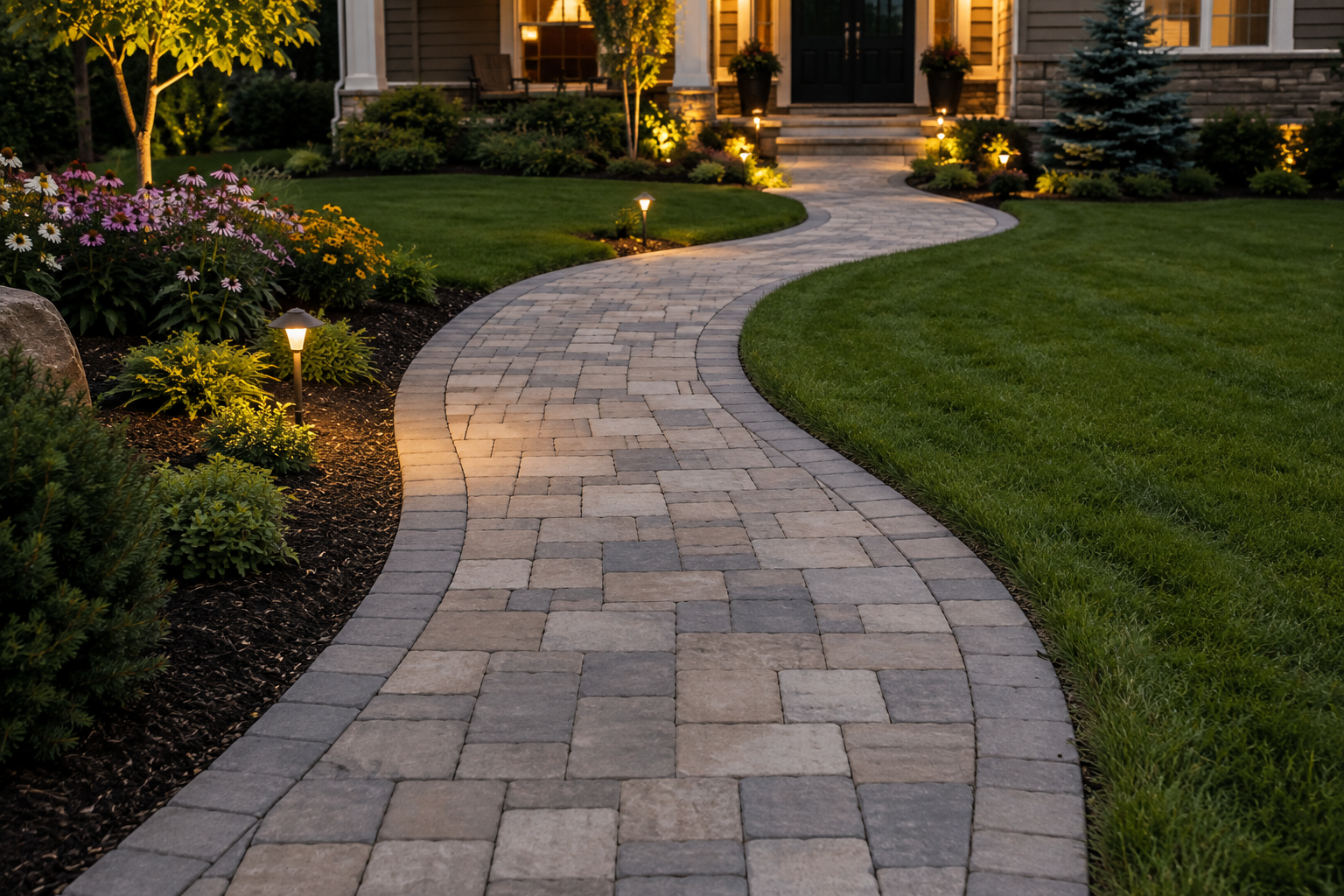
Design That Works With Your Property
A walkway isn't just a path — it's the first thing visitors walk on, and it sets the tone for the rest of the property. Width, material, pattern, and how it meets the driveway, front steps, and landscape all matter.
We design walkways as part of the full landscape and hardscape plan, not as afterthoughts. The material coordinates with your patio, walls, and home exterior so the property reads as one cohesive space.
Why Massachusetts Walkways Need More Than Generic Installation
Frost-Line Depth
Massachusetts frost line runs 36 to 48 inches. Walkway bases must be deep enough and well-drained enough to prevent heaving. Shallow installations fail within two winters.
Glacial Till Soil
Much of MetroWest sits on clay-heavy glacial till that drains slowly. Walkway base material has to compensate with crushed stone that water moves through, not sits on top of.
Polymeric Sand Jointing
Standard sand washes out with every rain. Polymeric sand hardens to lock pavers in place, block weed growth, and resist ant infiltration — critical for walkways that stay tight year after year.
Drainage Integration
A walkway that traps water against your foundation is worse than no walkway at all. Every installation includes proper pitch away from the house and integration with the property's overall drainage plan.
35+ Years of Walkway & Hardscape Craftsmanship
We've been building walkways across MetroWest since 1989. Same family, same crew accountability, same base-first approach that separates work that lasts from work that cracks.
People Also Ask About Paver Walkways
How much does a paver walkway cost per square foot?
Paver walkways in Massachusetts typically run $20 to $45 per square foot fully installed. Concrete pavers sit at the lower end, while natural bluestone and complex patterns command higher pricing. That range includes excavation, base prep, materials, and labor.
Are pavers better than poured concrete for a walkway?
For New England, pavers are generally the better choice. The joints between individual units allow the surface to flex with frost cycles instead of cracking. If a single paver is damaged, you replace just that one without disturbing the rest. Poured concrete develops surface cracks and is much harder to repair.
How long does a paver walkway last in Massachusetts?
A properly installed paver walkway lasts 25 to 50+ years. Bluestone can last even longer. The longevity depends almost entirely on the base preparation and drainage. The pavers themselves are extremely durable; it's the foundation underneath that determines whether they stay level and locked.
Do paver walkways add value to a home?
Yes. A well-designed paver or bluestone walkway improves curb appeal and can yield an ROI of 50 to 70 percent at resale. In MetroWest markets where buyers expect polished outdoor spaces, the front walkway is one of the first things they notice during showings.
What is the best base for a paver walkway in New England?
The standard is 6 to 8 inches of compacted dense-graded crushed stone (3/4-inch minus), topped with 1 inch of concrete sand as a setting bed. This depth prevents frost heave and provides a stable, well-drained foundation. We never cut base depth short.
How wide should a front walkway be?
A front walkway should be a minimum of 4 feet wide to allow two people to walk side by side comfortably. For formal entries and higher-end properties, 5 to 6 feet creates a more generous, welcoming approach. Anything under 3 feet feels cramped and looks disproportionate on most homes.
What pattern is strongest for paver walkways?
Herringbone (90-degree or 45-degree) is the strongest interlocking pattern and best resists shifting under foot traffic. Running bond is the simplest and most cost-effective. Basketweave adds visual interest while maintaining structural integrity. The choice depends on aesthetic preference and traffic load.
Can you install a walkway without removing the old one?
In most cases, no. Laying new pavers over an old walkway skips the critical base preparation step and almost always results in settling, drainage issues, and an uneven surface within a few years. Proper installation requires removing the old surface, excavating to depth, and building the base correctly.
Ready to Design Your Walkway?
Whether you're planning a front entry walkway, a garden path, or connecting your driveway to your patio, we're ready to walk your property and talk through materials, design, and cost. Family-owned and in business since 1989.
508-626-8855 Request a Free Estimate